Rubio Tapped for Venezuela Overhaul | Balance of Power 1/06/2026
Summary
The episode covered the geopolitical and market implications of the U.S. operation in Venezuela, political fallout and midterm strategy, and a CES interview with Nvidia CEO Jensen Huang and Siemens CEO Roland Busch. Huang and Busch discussed the Nvidia-Siemens AI industrial partnership, Vera Rubin's efficiency gains, AI-driven demand for energy and power infrastructure, and physical AI and robotics. A Bloomberg technology editor later analyzed Nvidia's strong demand but wary investor sentiment, China chip competition, and cooling-stock pressure.
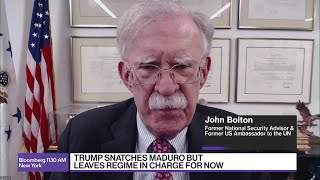
- U.S. action in Venezuela and the potential for oil-sector redevelopment are discussed; John Bolton is skeptical of a quick oil recovery.
- Political panel debates whether Venezuela policy will matter in midterm elections; Rick Davis says voters focus on affordability and health care.
- Nvidia and Siemens announce a broad partnership to accelerate industrial software, simulation, and factory automation with AI.
- Jensen Huang highlights Vera Rubin's 10x efficiency gains, strong demand, memory bottlenecks, and potential H200 demand in China.
- Roland Busch sees demand exceeding supply for industrial automation and power infrastructure, including turbines and transformers.
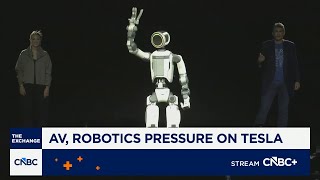
- Jensen Huang expects physical AI and robotics breakthroughs and praises Tesla's autonomous-driving stack.
- Michael Shepard says Nvidia fundamentals are strong but investor sentiment on the AI trade is wary; China may promote local AI chip champions.
- Efficiency gains in AI chips are seen pressuring data-center cooling stocks; energy and nuclear power remain in focus.
Ideas
Up Next
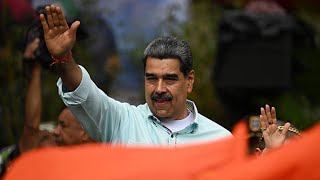
This Bloomberg Markets video, published January 06, 2026, features Roland Busch, Jensen Huang, Michael Shepherd discussing ROBO, SIEMENS, NVDA, XLE, Power infrastructure, TSLA, SMH, Data center cooling. 10 trade ideas extracted by AI with direction and confidence scoring.
Speakers: Roland Busch, Jensen Huang, Michael Shepherd · Tickers: ROBO, SIEMENS, NVDA, XLE, Power infrastructure, TSLA, SMH, Data center cooling