'We should use neither military nor economic force' around Greenland, says Citadel's Ken Griffin
Summary
Ken Griffin discusses the US case for Greenland access, arguing the US already has needed treaty access and that any push should not use military or economic force. He criticizes tariffs as taxes borne by American consumers and businesses, saying they have not yet delivered manufacturing job growth and make new factory investment harder. He also stresses that investors want stability and lower trade friction between major trading partners.
- Ken Griffin comments on President Trump's case for US access to Greenland.
- Griffin says the US should not use military or economic force to pursue Greenland and that treaty rights may already provide access.
- He sees strategic missile-defense considerations around Greenland as deserving review.
- Griffin says tariffs act as taxes and recent research shows American consumers and businesses bear the cost.
- He says tariff policy has not yet produced US manufacturing job growth.
- He argues long-standing low-tariff history makes tariff-dependent factory investment difficult.
- He says global investors want stability in trade terms and dislike escalating trade stress.
Ideas
Up Next

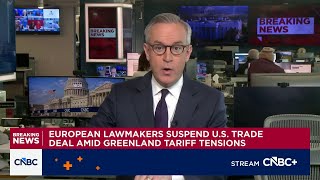


This CNBC video, published January 21, 2026, features Ken Griffin discussing U.S. manufacturing sector. 1 trade idea extracted by AI with direction and confidence scoring.
Speakers: Ken Griffin · Tickers: U.S. manufacturing sector