Mixed US Messaging Raises Questions on Strategy
Speakers
Victoria Nuland
— Former Under Secretary of State
Gina Caffino
— Political/Geopolitical Analyst
Summary
- The US is in "Week 2" of a kinetic war with Iran; the US claims to have established air superiority and is degrading Iranian missile capabilities.
- A strategic disconnect exists: The White House is signaling "operational success" (degrading weapons) while simultaneously hinting at "unconditional surrender" and "regime change" via social media.
- Iran’s proxies (Hamas, Houthis) are notably silent/disarrayed, suggesting a breakdown in Iran's regional power projection.
- The conflict is escalating toward targeting Iranian nuclear facilities (Fordow/Pickaxe Mountain) to neutralize 800 lbs of enriched uranium.
Ideas
Victoria states US allies' ability to intercept Iranian missiles has been "seamless" and that the US has established "air superiority," allowing the use of "non-stealth aircraft" to increase the "tempo of the bombing." She later mentions using "heavy bombers" to destroy nuclear facilities (4:22). "Seamless interception" implies high expenditure of defensive munitions (Patriot/SM-3/SM-6), necessitating immediate replenishment contracts for Raytheon (RTX) and Lockheed Martin (LMT). The shift to "heavy bombers" and "non-stealth" aircraft (F-15s/F-16s) signals a transition from surgical strikes to a high-volume air campaign, benefiting Northrop Grumman (NOC - B-21/B-2 bombers) and increasing maintenance/sustainment revenues for legacy platforms. LONG. The conflict is shifting from deterrence to active, high-tempo kinetic degradation. A sudden diplomatic "off-ramp" or ceasefire would compress the defense risk premium.
Gina notes the administration is floating "unconditional surrender" and "regime change," warning this could draw the US into a "longer term open ended conflict." While Victoria argues the war is contained, Gina identifies "mission creep." If the objective shifts from destroying missiles to toppling the regime, the conflict duration extends indefinitely. Historically, "regime change" in the Middle East creates extreme volatility in energy supply chains. Even if Iran is currently weak, a desperate regime may attempt to mine the Strait of Hormuz, necessitating a geopolitical risk premium on Oil (USO) and Energy Equities (XLE). LONG. This is a hedge against the "quagmire" scenario Gina describes. Victoria's thesis proves correct—that Iran is too weak to retaliate and the conflict ends quickly, causing oil prices to retrace.
Gina states the administration "has not yet settled on what exactly success is defined by" and highlights "mixed messaging" between operational wins and ideological goals. Markets despise uncertainty. The lack of a clear exit strategy ("unconditional surrender" vs. "degrading missiles") increases the probability of a policy error or regional escalation. Gold functions as the primary hedge against this specific type of geopolitical incoherence and the potential for the conflict to drag on longer than priced in. LONG. Safe-haven demand increases as the "fog of war" thickens regarding US ultimate objectives. A decisive, rapid US victory that restores stability quickly would reduce safe-haven demand.
Up Next



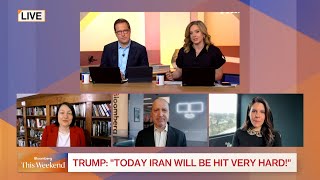
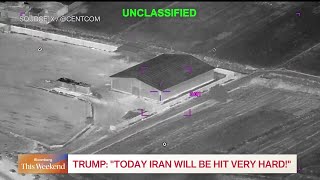
This Bloomberg Markets video, published March 07, 2026, features Victoria Nuland, Gina Caffino discussing LMT, RTX, NOC, USO, XLE, GLD. 3 trade ideas extracted by AI with direction and confidence scoring.
Speakers: Victoria Nuland, Gina Caffino · Tickers: LMT, RTX, NOC, USO, XLE, GLD