Samsung Electronics, record Qualcomm-driven tailwind; why the stock can only surge; foundry semiconductor landscape about to flip | Hanbando CEO Park Jun-young
Summary
Park Jun-young, CEO of Hanbando, argues that Samsung Electronics is entering a strong memory upcycle and that its foundry business is past the bottom. He explains why HBM and the memory wall make memory demand structural across AI data centers, robots, and autonomous vehicles, and why Qualcomm/Tesla orders plus political diversification could help Samsung foundry. He also highlights Exynos 2600 adoption in Galaxy S26 as a near-term margin driver and says the AI-era monopoly triangle of Nvidia, TSMC, and SK hynix is starting to crack.
- Samsung's Q4 results showed a sharp memory-driven earnings jump and high DRAM prices.
- The speaker sees AI accelerators requiring HBM, with memory demand extending to physical AI, robots, and autonomous cars.
- Memory supply is constrained, and long-term agreements could support multi-year revenue.
- Samsung's foundry losses have bottomed, with HBM4 logic-die integration and Qualcomm/Tesla orders as potential catalysts.
- Taiwan geopolitical risk and customer diversification may reduce reliance on TSMC.
- Exynos 2600 adoption in Galaxy S26 could lower Qualcomm payments and improve Samsung margins.
- The AI-era monopoly of Nvidia, TSMC, and SK hynix may be weakening as alternatives and multi-sourcing grow.
- The discussion remains focused on Samsung Electronics and the memory/foundry semiconductor supply chain.
Ideas
Up Next


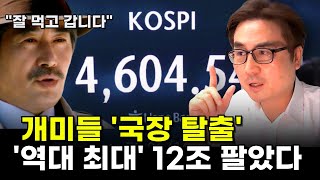

This 815 Money Talk (815머니톡) video, published January 08, 2026, features Park Jun-young discussing 005930.KS, SMH, 000660.KS, MU, NVDA, TSM. 3 trade ideas extracted by AI with direction and confidence scoring.
Speakers: Park Jun-young · Tickers: 005930.KS, SMH, 000660.KS, MU, NVDA, TSM