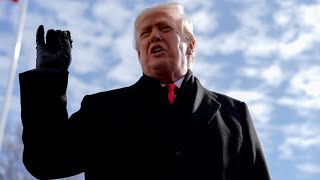
Will Chair Powell Keep His Fed Seat Even After His Term Ends? | Kim Jin-il, Vincent, Pyeon Da-song

파월 의장, 임기 끝난 후에도 연준 자리 지킬까 | 김진일, 빈센트, 편다송 [밥 보다 투자 하나]
Watch on YouTube ↗  |  January 28, 2026 at 03:42  |  44:17  |  3PRO TV (삼프로TV)
Speakers
Kim Jin-il — Professor of Economics, Korea University
Pyeon Da-song — Host
Vincent — Host

Summary

The program discusses the January FOMC, where a rate hold is almost fully priced, and focuses on Powell's press conference amid his conflict with Trump. It also examines Fed chair succession scenarios and their market implications for Treasury yields, the dollar, Korean FX, Bank of Korea rate cuts, and Korean equity levels.

  • January FOMC rate decision is expected to be a hold, with attention on Powell's press conference.
  • Powell-Trump tension and possible Fed chair succession are treated as key sources of uncertainty.
  • Kim argues U.S. political polarization could lift Treasury yields and weaken the dollar.
  • Kim sees the won as manageable within a volatility band rather than at a specific level.
  • A stable won could give the Bank of Korea room to cut rates, supporting Korean government bonds.
  • Host Pyeon says KOSPI 5,000 and KOSDAQ 1,000 should be accepted as new normal levels.
  • Kim favors aggressive exposure to familiar Korean assets and a more conservative, band-based approach to foreign assets and FX.
Ideas
Fed chair surprise lifts long-end yields.
If Trump unexpectedly nominates a new Fed chair during the January FOMC, the added confusion would likely push long-term U.S. Treasury yields higher.
Kim Jin-il Professor of Economics, Korea University 16:40
U.S. polarization lifts yields, weakens dollar.
Kim argues that U.S. political polarization and the Trump-Fed conflict are signs of deeper national fracture. He expects this environment to be reflected in rising U.S. Treasury yields and a weaker dollar.
Kim Jin-il Professor of Economics, Korea University 38:50
Won is acceptable within volatility band.
Kim argues investors should treat the won through an acceptable volatility band rather than a specific level. If USD/KRW stays within that band, the market is stable and no crisis condition is triggered, even around current higher levels.
Kim Jin-il Professor of Economics, Korea University 40:29
Stable won allows BOK cuts, supporting bonds.
Kim argues the main constraint on Bank of Korea rate cuts has been the FX market. If USD/KRW remains stable within an acceptable band, the BOK can cut rates more comfortably, which would support Korean government bonds.
Korean index levels are new normal.
Pyeon says KOSPI 5,000 and KOSDAQ 1,000 should be accepted as the new normal rather than dismissed as a bubble or optical illusion, and investors should adapt to these higher Korean equity levels.
Kim Jin-il Professor of Economics, Korea University 43:01
Favor familiar Korean assets over foreign.
Kim advises investors to be more aggressive in Korean assets where they have local knowledge and an edge, while treating foreign assets and FX more conservatively through a volatility-band approach and including them in a diversified portfolio.
Up Next

This 3PRO TV (삼프로TV) video, published January 28, 2026, features Pyeon Da-song, Kim Jin-il discussing TLT, UUP, USD/KRW, Korean government bonds, EWY, KOSDAQ, Korean equities. 6 trade ideas extracted by AI with direction and confidence scoring.

Speakers: Pyeon Da-song, Kim Jin-il  · Tickers: TLT, UUP, USD/KRW, Korean government bonds, EWY, KOSDAQ, Korean equities