Fed Cornered: Nobel Economist Reveals When Rate Hike Will Really Come | Simon Johnson

Watch on YouTube ↗  |  September 03, 2026 at 17:54  |  42:24  |  The David Lin Report
Speakers
Simon Johnson — Professor of Entrepreneurship, MIT Sloan School of Management; 2024 Nobel Laureate in Economic Sciences
Kevin Walsh — Editor-in-Chief, The Block

Summary

Simon Johnson discusses rising long-term bond yields, inflation pressures from energy and AI, Federal Reserve rate-hike timing, U.S. debt and dollar risks, and the boom-bust risks around AI. He argues long-term yields are signaling inflation and debt concerns, the Fed likely defers hikes to December, and AI resembles past transformative booms with bust risk. The conversation also covers China's automation push and the absence of an alternative reserve currency to the dollar.

  • Long-term yields are rising across the U.S., Europe, and Japan with inflation expectations up and PCE above 3.5%.
  • Elevated oil and diesel prices are feeding cost pressure into inflation while benefiting energy and oil producers.
  • Simon Johnson expects the Federal Reserve to defer rate hikes from September and October to December.
  • The AI boom is boosting growth and chip prices but raises railway-like and internet-like boom-bust concerns.
  • U.S. debt and loose fiscal and monetary policy are seen as inflationary and a headwind for the dollar.
  • China's automation-heavy policy is contributing to youth unemployment and economic risk.
  • No credible alternative to the U.S. dollar as global reserve currency is seen in the near term.
Ideas
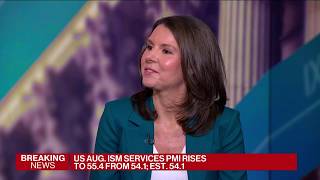
Simon Johnson Professor of Entrepreneurship, MIT Sloan School of Management; 2024 Nobel Laureate in Economic Sciences 1:38
Long-term yields rise on inflation/debt.
Higher long-term bond yields are a real signal rather than noise: inflation expectations are ticking up, PCE is above 3.5%, the same yield move is visible in Western Europe and Japan, and U.S. debt/deficits are putting pressure on benchmark rates, especially the 10-year Treasury yield.
Kevin Walsh Editor-in-Chief, The Block 6:49
AI infrastructure investment boom accelerates.
In the Jackson Hole clip, Kevin Walsh argues AI progress is faster than expected, the potential for substantially higher growth is rising, and ever-expanding pools of capital are pouring into AI-related infrastructure of all sorts, with token sales for leading AI labs up 500% year over year.
Simon Johnson Professor of Entrepreneurship, MIT Sloan School of Management; 2024 Nobel Laureate in Economic Sciences 10:40
High oil prices boost energy profits.
Higher gasoline and diesel prices are a real cost pressure that will feed into inflation, and the energy sector is a net beneficiary with opportunities and high profits for oil companies even as consumers pay more.
Simon Johnson Professor of Entrepreneurship, MIT Sloan School of Management; 2024 Nobel Laureate in Economic Sciences 14:14
AI boom carries railway-like bust risk.
AI resembles past transformative booms such as railways and the internet: the technology may be real, but boom-bust cycles, unsustainable financial structures, round-tripping of capital, and disclosure gaps mean investors should keep the risk of a bust in mind.
Simon Johnson Professor of Entrepreneurship, MIT Sloan School of Management; 2024 Nobel Laureate in Economic Sciences 17:34
China's automation push hurts its economy.
China's policy preference for automation and robots is running ahead of its labor market, contributing to high youth unemployment and removing lower rungs of development; China is not doing itself any favors with this approach.
Simon Johnson Professor of Entrepreneurship, MIT Sloan School of Management; 2024 Nobel Laureate in Economic Sciences 26:11
AI boom pushes chip prices higher.
The AI boom is an inflation shock that is pushing up semiconductor and chip prices, feeding into supply chains.
Simon Johnson Professor of Entrepreneurship, MIT Sloan School of Management; 2024 Nobel Laureate in Economic Sciences 28:32
Fed likely hikes rates in December.
The Fed is likely to defer rate hikes until December because the October FOMC meeting is right before midterm elections, then likely raise rates as inflationary pressure builds; a half-point hike is possible but depends on data and market pressure.
Simon Johnson Professor of Entrepreneurship, MIT Sloan School of Management; 2024 Nobel Laureate in Economic Sciences 35:15
Dollar faces inflation-driven depreciation.
Inflationary pressure, the temptation to inflate away debt, and running the economy too hot will tend to depreciate the dollar, so the U.S. dollar faces headwinds even though there is no immediate reserve-currency alternative.
Up Next

This The David Lin Report video, published September 03, 2026, features Simon Johnson, Kevin Walsh discussing 10-year U.S. Treasury Yield, AI-related infrastructure, WTI, XLE, XLK, FXI, SMH, Federal Funds Rate, UUP. 8 trade ideas extracted by AI with direction and confidence scoring.

Speakers: Simon Johnson, Kevin Walsh  · Tickers: 10-year U.S. Treasury Yield, AI-related infrastructure, WTI, XLE, XLK, FXI, SMH, Federal Funds Rate, UUP