Nothing erodes household liquidity faster than higher gas prices, says Joe Lavorgna
Speakers
Becky
— Host
Joseph Lavorgna
— Former Chief Economist, National Economic Council
Katie Richards
— Senior Strategic Advisor, Groundwork Collaborative
Andrew Ross Sorkin
— Co-Anchor, Squawk Box
Summary
- The US economy is facing a stagflationary crosscurrent: pro-growth tax policies (100% expensing for structures, no tax on tips/overtime) are clashing with a massive energy shock driven by Middle East conflict.
- Oil has spiked to around $100 a barrel, acting as a highly regressive tax on consumers and rapidly draining household liquidity.
- The labor market is showing cracks, with a reported 92,000 job loss in February and downward revisions to December, contradicting the narrative of a robust economy.
- Healthcare policy shifts (Medicaid cuts, expiration of ACA subsidies) are stripping millions of insurance, creating a dual headwind of rising out-of-pocket consumer costs and potential bad debt for medical providers.
- The Federal Reserve is expected to remain sidelined (no rate cuts) despite softening growth, as they are paralyzed by the fear of repeating the "transitory" inflation policy errors of 2022-2023.
Ideas
"The tax incentives on the building, especially the structures 100% expensing... is going to lead to huge refunds." 100% upfront tax expensing for structural investments drastically improves the ROI and cash flow profile for corporate capital expenditures. This will trigger a wave of non-residential construction and infrastructure projects. Companies that rent heavy equipment (URI), manufacture earth-moving machinery (CAT), or supply aggregates and building materials (VMC) will see a direct surge in order books as corporations rush to take advantage of the tax shield. LONG. Pro-growth tax policy directly subsidizes heavy construction and CAPEX, insulating these industrials from broader consumer softness. If the Fed is forced to hike rates further due to the oil shock, the cost of capital could eventually outweigh the tax benefits of new construction.
"There's nothing that will take liquidity away from households faster than higher gas and oil prices... that will collapse real income, hurts spending and lead to a stalling out in growth." Energy acts as a mandatory expense. When gas prices spike, lower- and middle-income consumers must allocate a higher percentage of their stagnant wages to commuting and heating, directly crowding out discretionary purchases. Retailers, apparel brands, and premium food/beverage chains will suffer immediate volume declines and margin compression as household budgets tighten. SHORT. Consumer discretionary equities are highly vulnerable to rapid collapses in real income driven by exogenous commodity shocks. A sudden geopolitical resolution in the Middle East could cause oil prices to crash, instantly restoring consumer purchasing power and triggering a massive short-squeeze in retail stocks.
"The war that Trump has embarked on has caused gas prices to go up dramatically in the last week. Those will continue to rise. Oil is trading around $100 a barrel." The market is currently pricing the Middle East conflict as a short-term disruption, but the physical oil market is already reflecting severe supply premiums. Sustained $100/bbl oil directly translates to massive free cash flow generation for upstream exploration and production companies, as well as integrated majors. These companies will use the windfall to accelerate share buybacks and special dividends. LONG. Energy equities offer a direct hedge against the geopolitical chaos and the resulting inflationary spike that is threatening the rest of the market. Demand destruction. If oil stays too high for too long, it could trigger a deep global recession, ultimately destroying the demand for crude and crashing prices.
"Last year's budget bill... cut Medicaid and failed to extend really important subsidies for Affordable Care Act coverage has led to millions of Americans losing their health insurance." When patients lose Medicaid or ACA subsidies, they do not stop getting sick; they simply show up to emergency rooms uninsured. For hospital operators, this shifts their revenue mix from government-reimbursed care to uncompensated care (bad debt). As the uninsured population swells, hospital operating margins will be severely compressed by the legal obligation to treat patients who cannot pay. SHORT. For-profit hospital systems are highly sensitive to the uninsured rate, and the expiration of federal healthcare subsidies is a direct hit to their bottom line. The administration could pass emergency legislation to reinstate subsidies if the political fallout from millions losing coverage becomes too severe ahead of midterms.
Up Next

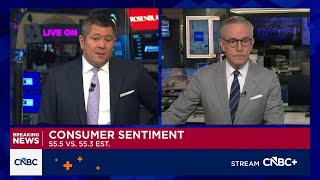



This CNBC video, published March 13, 2026, features Joseph Lavorgna, Katie Richards discussing URI, VMC, CAT, SBUX, XLY, NKE, CVX, OXY, XLE, HCA, UHS, CYH. 4 trade ideas extracted by AI with direction and confidence scoring.
Speakers: Joseph Lavorgna, Katie Richards · Tickers: URI, VMC, CAT, SBUX, XLY, NKE, CVX, OXY, XLE, HCA, UHS, CYH