Carlyle's Currie Warns Against Oil and Gas Hoarding
Speakers
Jeff Currie
— CSO Energy Pathways, Carlyle Group
Summary
- Global oil markets are facing an estimated 18 million barrels per day (bpd) disruption due to geopolitical conflicts, supply chain breakdowns, and canceled shipping insurance.
- Panic hoarding by nations (China, Japan, Korea) and retail consumers is adding an artificial 2 to 3 million bpd of demand on top of the supply disruptions.
- The global economy is undergoing a structural regime change, shifting from a decade of "asset-light" technology dominance (2014-2024) to an "asset-heavy" hard asset boom.
- The petrodollar recycling system is broken; emerging markets are now using commodity windfalls to buy gold instead of US Treasuries to avoid the risk of Western sanctions.
- The US equity market is highly vulnerable to energy shocks at the "wealth level," with energy comprising only 3% of the market (at 12x multiples) while energy-dependent sectors make up 53% (at 36x multiples).
- Asian refined product markets are in crisis, highlighted by the loss of a 900,000 bpd refinery and Singapore jet fuel spiking to over $230 a barrel.
Ideas
We're moving from that world that was defined from 2014 to 2024. You know, is that new economy boom, you know, driven by max heaven is a technology boom asset light... you're long three [energy] It's short 53 at the wealth level. Asset-light technology companies are effectively "short energy" because they rely on cheap inputs, low inflation, and abundant liquidity to justify their 36x multiples. As commodity prices rise and higher inflation crowds out private credit, these high-duration equities will suffer severe multiple compression. The macroeconomic tailwinds that supported asset-light tech for the last decade are reversing, making these sectors highly vulnerable to a regime change. Artificial Intelligence could drive unprecedented productivity gains that outpace the drag of rising energy and capital costs, allowing tech multiples to remain elevated.
Own the hard assets, own the HALOs... revenge of the old economy, because it was coming off the back of the dot com boom this time around... I want to own metal. The global economy is shifting from a decade of digital, asset-light growth to an asset-heavy regime that requires massive amounts of physical materials. Rising costs of capital and labor will force a repricing of industrial metals and the companies that mine them, as new supply cannot be brought online quickly enough to meet the demands of this new economic era. Mining and metal equities offer leveraged exposure to the "revenge of the old economy" and the structural shortage of physical commodities. A strong US dollar or a severe manufacturing and real estate contraction in China could suppress base metal prices despite long-term supply constraints.
Ever since 2022, commodity prices spike. These emerging markets get money. What do they buy? They buy gold. They buy anything but dollar denominated assets because they don't want to get sanctions imposed on them, like what happened to the Russians. The weaponization of the US dollar against Russia fundamentally broke the petrodollar recycling system. Instead of acting as a "shock absorber" by buying US Treasuries with their energy windfalls, emerging market central banks are systematically buying gold. This creates a structural, price-insensitive sovereign bid for the metal. Gold is transitioning from a speculative inflation hedge to a mandatory non-sovereign reserve asset for the Global South. The US government could successfully negotiate new frameworks that restore global trust in dollar-denominated reserves, or a massive global liquidity crisis could force central banks to liquidate gold for USD.
Let's look at the equity market, energy, 3% of the market. How big are the things that are short? 53%. What is the multiple on that? Three, it's like 12 or 13. What is the multiple on the other one? 36 you're in trouble at the wealth level. The US economy is protected from energy shocks at the cash flow level (as a net exporter), but the stock market is dangerously unbalanced. As oil prices remain elevated due to structural hoarding and supply disruptions, capital will be forced to rotate out of high-multiple, energy-consuming sectors into low-multiple, cash-flowing energy producers to hedge portfolio risk. Energy equities are severely under-owned and mispriced relative to the broader market, making them a prime vehicle to capture the repricing of hard assets. A severe global recession could destroy baseline oil demand, offsetting the geopolitical and hoarding premiums currently supporting prices.
Jet fuel in Singapore spiked to over $230 a barrel. Yeah, you're at that point and that's the hoarding is only amplifying it. And you just took out a 900,000 barrels per day refinery that was bombed... Asia is going to be the one that's going to be in the deepest problem. Severe refinery disruptions and panic hoarding in Asia are causing localized shortages and blowing out crack spreads (refining margins). US-based refiners with significant export capacity will be able to capture these massive global arbitrage opportunities by shipping refined products to desperate Asian markets. US refiners are positioned to print cash as they fill the structural void left by damaged Middle Eastern and Asian refining infrastructure. The US government could impose export bans or windfall taxes on domestic refiners to keep local gasoline and diesel prices low for US consumers.
Up Next

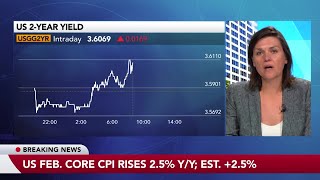



This Bloomberg Markets video, published March 11, 2026, features Jeff Currie discussing XLK, QQQ, XME, TECK, FCX, GLD, XLE, XOM, CVX, VLO, MPC, PSX. 5 trade ideas extracted by AI with direction and confidence scoring.
Speakers: Jeff Currie · Tickers: XLK, QQQ, XME, TECK, FCX, GLD, XLE, XOM, CVX, VLO, MPC, PSX