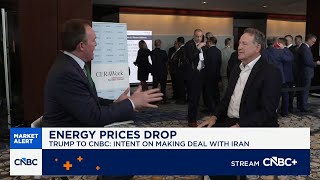
Watch CNBC's full interview with U.S. Interior Secretary Doug Burgum
Speakers
Doug Burgum
— US Secretary of the Interior
Summary
- Doug Burgum expresses confidence in U.S. energy dominance policy under President Trump, designed for geopolitical moments like the Iran conflict.
- U.S. is the world's largest oil producer, LNG exporter, and natural gas producer, sometimes by more than double the next countries.
- Engagement with Iran is ongoing for a possible solution, with a timeframe for progress, but markets are reacting positively.
- Asia allies (e.g., South Korea, Japan) want to buy more energy from the U.S. to avoid reliance on adversarial countries like Iran, Russia, or Venezuela.
- Venezuela has turned from a sanctioned adversary to a strategic ally, with oil production potentially increasing from 800,000 to 1.2 million barrels (up 50%) in a short time.
- Emphasis on energy security for U.S. Pacific territories (Guam, Hawaii) and allies; Alaska LNG project is a high priority due to secure supply (8-day shipping to Tokyo vs. 28 days via Hormuz).
- Record lease sales in Alaska with bids from ExxonMobil, ConocoPhillips, Repsol, Santos, etc., generating record revenue; Japan's prime minister expressed interest in buying more Alaska oil.
- California imports 63% of its oil from foreign countries, primarily Iraq via the Strait of Hormuz, raising national security and price concerns.
- California has only 8 refineries (down to 6), while Texas has 36, highlighting policy-driven supply restrictions.
- Criticism of the Jones Act; suggestion to kill it forever to improve energy supply chains, as blocking pipelines raises national security risks and prices.
Ideas
Burgum explicitly states the U.S. is the world's largest oil producer, LNG exporter, and natural gas producer, with an energy dominance policy made for geopolitical moments like the Iran conflict. This policy ensures affordable domestic energy, supports allies by reducing reliance on adversarial suppliers, and drives prosperity and security, implying sustained demand and growth for the U.S. energy minerals sector. LONG on the energy minerals sector due to strong policy backing, production capacity, and global demand from allies seeking secure alternatives. Geopolitical resolutions that reduce tensions or shifts in U.S. energy policy post-administration could impact sector dynamics.
Up Next


This CNBC video, published March 23, 2026, features Doug Burgum discussing XLE. 1 trade idea extracted by AI with direction and confidence scoring.
Speakers: Doug Burgum · Tickers: XLE