LIVE: First Lady Melania Trump presides over the UN Security Council amid the Iran war — 3/2/2026
Speakers
Melania Trump
— First Lady of the United States
Rosemary DiCarlo
— UN Under-Secretary-General for Political and Peacebuilding Affairs
Representatives
— Ambassadors from various nations (Greece, France, DRC, Denmark, Panama, Liberia, UK, China, Somalia, Colombia, Pakistan, Bahrain, Latvia, Russia)
Summary
- Geopolitical Context (2026): The world is facing the highest number of armed conflicts since WWII. Specific active theaters mentioned include an "Iran War" (involving Bahrain and US inquiry), the ongoing Russia-Ukraine war (entering year 4), and conflicts in Israel/Gaza/Lebanon.
- The EdTech Pivot: The central theme is the necessity of "Digital Education" as a humanitarian lifeline. The UN and member states are shifting focus from physical schools (which are being bombed) to decentralized, digital, and AI-driven learning platforms.
- Infrastructure Gap: There is a coordinated call for "low bandwidth" and "offline-first" technologies to bridge the digital divide in conflict zones (e.g., DRC, Afghanistan, Sudan).
- AI & Blockchain Endorsement: First Lady Melania Trump explicitly links "digital currency," "blockchain payment systems," and "AI's massive factual database" as tools to democratize knowledge and bypass physical borders.
Ideas
DiCarlo explicitly highlights "UNICEF's Learning Passport developed in partnership with Microsoft" which is already serving 10 million children in 47 countries. The UN is validating Microsoft not just as a software vendor, but as a critical piece of humanitarian infrastructure. As the Security Council pushes for "digital transformation of educational systems" in conflict zones (a massive global market), Microsoft is the named incumbent partner for these government-level contracts. Long MSFT as the primary beneficiary of global "Education in Emergency" funding. Budget cuts in UN funding or geopolitical fragmentation leading to bans on US tech in adversarial nations.
France, the UK, and Bahrain emphasize that digital spaces are being used for "recruitment, exploitation, and radicalization." France mentions the "Online Child Protection Lab" and new laws to secure digital spaces. The push for digital education comes with a mandate for "Safety by Design." Governments will not deploy ed-tech without enterprise-grade cybersecurity to prevent radicalization and data theft. This implies a surge in demand for identity management (OKTA) and network security (PANW) integrated into public sector platforms. Long Cybersecurity, specifically those with strong government/public sector verticals. Privacy concerns limiting the implementation of surveillance/monitoring tools on children's devices.
Melania Trump
First Lady of the United States
Trump states, "We must strive to achieve connectivity in the most remote locations... roughly six billion individuals have a mobile device." Liberia and Somalia also call for technology that works in "low bandwidth" and "off-grid" environments. Traditional fiber/cell towers are targets in war (as noted by the DRC and Ukraine reps). The solution demanded is satellite-based, direct-to-device connectivity that bypasses local terrestrial infrastructure. Companies providing satellite broadband and low-earth orbit connectivity will see increased government subsidization to close the "digital divide" for security reasons. Long Satellite & Space Communications providers. High capital expenditure costs for satellite deployment and technical failure rates.
Melania Trump
First Lady of the United States
The First Lady states, "Digital currency and payment system via blockchain plus AI's massive factual database is already revolutionizing media and financial markets." It is rare for a US official at the UN to explicitly endorse "digital currency" and "blockchain" as tools for freedom and education. This signals a potential administration shift toward favorable crypto regulation or the integration of blockchain in US foreign aid distribution. Watch Coinbase and crypto-infrastructure stocks for regulatory tailwinds. The statement may be rhetorical rather than policy-binding; global regulatory fragmentation remains high.
Rosemary DiCarlo
UN Under-Secretary-General for Political and Peacebuilding Affairs
The briefing opens with the statistic that the world faces "the highest number of armed conflicts since the Second World War." Bahrain explicitly mentions "Iranian aggression targeting my country," and France notes "massive and repeated Russian drone attacks." While the meeting is about education, the macro backdrop is escalating kinetic war involving major powers (US, Iran, Russia). "Education in conflict" implies the conflict is enduring. This guarantees sustained defense spending, particularly in air defense (to stop the drone attacks on schools mentioned by France) and missile systems. Long US Defense Primes. The humanitarian crisis is a symptom; the arms race is the cause. Potential ceasefires or diplomatic breakthroughs that reduce immediate demand for munitions.
Up Next
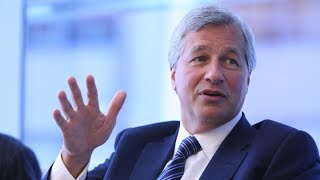
This CNBC video, published March 02, 2026, features Rosemary DiCarlo, Melania Trump discussing MSFT, OKTA, CRWD, PANW, IRDM, ASTS, SATS, COIN, RTX, LMT, NOC. 5 trade ideas extracted by AI with direction and confidence scoring.
Speakers: Rosemary DiCarlo, Melania Trump · Tickers: MSFT, OKTA, CRWD, PANW, IRDM, ASTS, SATS, COIN, RTX, LMT, NOC