Ideas
SK hynix-Intel US memory talks positive.
Lee Kwon-hee said SK hynix is discussing US memory production with Intel, potentially using Intel's unfinished fab site or a joint venture/acquisition. He views the news as market-positive and likely to proceed given SK hynix's past purchases from Intel such as Solidigm, though it is not yet confirmed.
HBM upcycle intact despite AI noise.
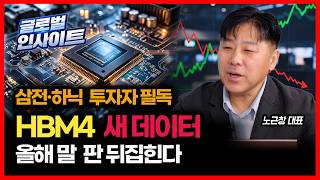
Lee Kwon-hee argued the AI/HBM semiconductor upcycle is still intact despite 'AI speed adjustment' noise. He cited TrendForce data showing HBM shipments and revenue rising sharply, with Nvidia demand up 30-40%, Google tripling, AMD/AWS roughly doubling, HBM4 ramping from 2026, and HBM revenue potentially 10x by 2030; he sees the investment cycle lasting at least five years.
Trade SK hynix rebound only.
Jang Woo-jin said the AI speed-adjustment scare was overdone, so he bought SK hynix and saw a short-term rebound; however, he recommends only trading it, not holding long, because rates, oil, and macro uncertainty remain.
Buy Korean chip-equipment ETF gradually.
Lee Kwon-hee prefers a basket approach to Korean semiconductor equipment/materials because individual names have opaque orders, limited disclosures, and still-high valuations. He recommends an ETF holding about 10 key equipment names, starting with a 5-10% position and adding on confirmation, given a five-year semiconductor investment cycle.
Samsung to 300k on HBM share.
Lee Kwon-hee expects Samsung Electronics' HBM market share to rise to the 20-30% range by year-end, supported by converting the Onyang packaging line to HBM packaging, moving DRAM lines to Vietnam, and expanding P4/P5/Yongin capacity. He expects Samsung Electronics to reach around KRW 300,000 and says investors can then rotate profits into semiconductor equipment.
KOSPI box 6,400-7,150.
Jang Woo-jin noted foreigners bought KOSPI futures for the first time since the simultaneous expiry, suggesting they stopped persistent selling, while options positioning implies a roughly 6,400-7,150 box with possible upside to about 7,300. He advised using it as a tactical range and monitoring daily because macro events can shift it.
Buy optical communications on dips.
Jang Woo-jin argued AI data centers face a power bottleneck, and optical communications are a key way to cut power consumption and connect racks and data centers. He expects the optical communications sector to keep working higher over time and said pullbacks should be bought.
Avoid loss-making Bitgwa Jeonja.
Jang Woo-jin warned that Bitgwa Jeonja is a loss-making theme stock with no earnings and a large market cap relative to fundamentals; he advised caution because such theme stocks can cause large losses.
Accumulate telecom equipment for AI+6G.
Jang Woo-jin said the 5G investment cycle began in 2017-2018, so 6G talk should begin as the cycle ages. He expects AI plus 6G to require ultra-low-latency communications and edge data centers, making telecom equipment a long-term accumulate-on-weakness sector, though not an all-in bet.
Hold Hyundai for robot optionality.
Lee Kwon-hee remains long-term positive on Hyundai Motor as the cheapest robot stock, but says robot value has already been erased and near-term catalysts are absent because Boston Dynamics listing is likely 2028 and management calls it a car company. He still holds shares, waiting for Nvidia joint research and a possible robot data-center joint venture, while warning that investors who bought only for a Boston Dynamics IPO should cut.
AI data-center power bottleneck favors fuel cells.
Jang Woo-jin sees power as the real AI data-center bottleneck with more than 80% probability. Because time-to-power matters more than LCOE, on-site fuel cells including SOFC and PAFC are needed; Bloom Energy's capacity expansion and Doosan Fuel Cell's Big Tech entry show the shortage is severe.
Doosan Fuel Cell enters Big Tech.
Jang Woo-jin said Doosan Fuel Cell has entered Big Tech with PAFC-based fuel cells; even the less efficient PAFC technology being adopted underscores the acute power shortage and validates fuel-cell demand.
Bloom Energy leads fuel-cell capacity growth.
Jang Woo-jin identified Bloom Energy as the fuel-cell leader for on-site AI data-center power, with capacity expanding from 1GW to 2GW by year-end and potentially 5GW later, which should benefit its supply chain.
Vinatech sales grow on Bloom capex.
Jang Woo-jin said Vinatech, a supercapacitor supplier tied to Bloom Energy's data-center power capex, has sales forecast to grow from about KRW 130bn this year to KRW 228.7bn next year; he sees high growth despite near-term valuation.
Nuclear takes breather; onsite favored.
Jang Woo-jin said nuclear power remains a long-term necessary solution, but near-term focus is on-site power because nuclear projects take time. Westinghouse stake and funding disappointments have caused a correction, so nuclear is taking a breather for now.
This 3PRO TV (삼프로TV) video, published September 16, 2026,
features Lee Kwon-hee, Jang Woo-jin
discussing 000660.KS, HBM/memory semiconductor supply chain, Korean semiconductor equipment/materials ETF, 005930.KS, EWY, Optical communications sector, Bitgwa Jeonja, Telecom equipment (AI + 6G), 005380.KS, AI data-center power/fuel-cell supply chain, 033260.KQ, BE, 126340.KQ, Korean nuclear power sector.
15 trade ideas extracted by AI with direction and confidence scoring.
Speakers:
Lee Kwon-hee,
Jang Woo-jin
· Tickers:
000660.KS,
HBM/memory semiconductor supply chain,
Korean semiconductor equipment/materials ETF,
005930.KS,
EWY,
Optical communications sector,
Bitgwa Jeonja,
Telecom equipment (AI + 6G),
005380.KS,
AI data-center power/fuel-cell supply chain,
033260.KQ,
BE,
126340.KQ,
Korean nuclear power sector