NATO's Secretary General Rutte to Meet With Trump Next Week
Speakers
Ivo Daalder
— Former US Ambassador to NATO
Summary
- Ivo Daalder frames NATO Secretary General Mark Rutte's upcoming visit as an attempt to convince President Trump that NATO is vital to American security, a case he believes is historically sound.
- He argues President Trump has never understood or bought into NATO's foundational benefit of preventing war in Europe, which is cheaper and makes the US more secure and prosperous.
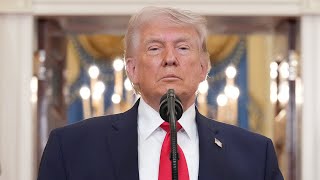
- Daalder notes Trump's recent primetime address did not explicitly threaten NATO withdrawal, suggesting potential recalibration and that he can be influenced by figures like Rutte.
- He highlights a legal constraint (the "Rubio law") requiring a Senate supermajority to withdraw from NATO, providing a political check on Trump's threats.
- Daalder observes the emergence of a "shadow alliance" or "middle power push" where US allies (e.g., UK, Canada, Australia, Japan) are organizing independently to maintain the international system, signaling a rebalancing of global power.
- He presents a thesis that the recent US-Israel war with Iran is a greater strategic blunder than the Iraq War, with far greater economic and geopolitical consequences.
- The key economic damage is attributed to the closure of the Strait of Hormuz, tearing at the global economy's fabric.
- Geopolitically, Russia and China are seen as beneficiaries: Russia gains from high oil prices and relaxed sanctions, while China perceives US distraction and expenditure of military resources as an opportunity to grow stronger relative to a weaker America.
- Daalder characterizes President Trump as being in a "strategic box" of his own creation regarding Iran, having underestimated Iranian preparedness and asymmetric warfare capabilities.
- He suggests the current dynamic leaves the US with weak negotiating leverage, with Iran holding advantageous cards.