Ideas
Favor Korean exporters over domestic-demand stocks.
The real economy and asset markets are decoupling: Korean companies selling into global markets and AI-related exporters are growing, while domestic-demand companies face weak consumer conditions and demographic decline. This export-versus-domestic polarization is structural rather than cyclical, so investors should favor export-oriented exposure and avoid domestic-demand stocks.
Favor Korean exporters over domestic-demand stocks.
The real economy and asset markets are decoupling: Korean companies selling into global markets and AI-related exporters are growing, while domestic-demand companies face weak consumer conditions and demographic decline. This export-versus-domestic polarization is structural rather than cyclical, so investors should favor export-oriented exposure and avoid domestic-demand stocks.
Gold supported by dollar and geopolitical concerns.
Gold demand is increasing because investors are worried about US-China hegemony, the dollar's future, and the precedent of sanctions and reserve diversification after Russia's invasion of Ukraine. China and other central banks have shifted reserves from Treasuries toward gold, supporting gold as a hedge.
Use savings to buy global innovative stocks.
Labor income alone is limited in a polarized economy, so workers should use savings to buy global innovative company stocks. This makes them part owners of global capital and serves as a portfolio hedge against domestic stagnation while letting them participate in global growth.
Cash is essential liquidity, not trash.
Cash is not trash; it is essential liquidity and optionality, especially during sudden market stress when stocks may be difficult to sell. Dividend stocks are attractive partly because they generate cash, while long-term deposits alone fail to cover inflation.
Equities hedge inflation better than Korean bonds.
Long-term inflation protection is best achieved through equities rather than gold, because inflation means companies can raise product prices and equities ultimately catch up. At current Korean yields, bonds are unlikely to cover purchasing power over the 10-20 year horizons relevant for retirement assets.
Equities hedge inflation better than Korean bonds.
Dollar-cost averaging is appropriate even after large market gains, but investors who missed last year's rally and now make a lump-sum catch-up bet are taking higher risk. AI productivity lag, employment weakness, and lower odds of a fourth consecutive strong S&P 500 year could bring large volatility and losses.
AI stocks face volatility from productivity lag.
AI is an undeniable major transformation, but there may be a multi-year productivity lag before adoption lifts productivity, and AI stock prices have risen while employment and consumption face risks. This creates high volatility and a developing setup rather than a clean near-term directional trade.
S&P 500 beats Nasdaq for retirement quality.
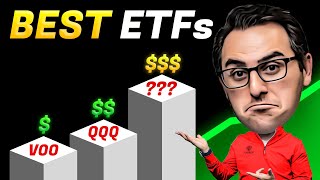
For retirement and long-term assets, the S&P 500 is more attractive than Nasdaq because it contains 500 quality large-cap companies across banks, consumer, energy, and technology, whereas Nasdaq is more concentrated in growth/tech/small caps and leveraged versions add risk. Long-term quality is the priority.
S&P 500 beats Nasdaq for retirement quality.
For retirement and long-term assets, the S&P 500 is more attractive than Nasdaq because it contains 500 quality large-cap companies across banks, consumer, energy, and technology, whereas Nasdaq is more concentrated in growth/tech/small caps and leveraged versions add risk. Long-term quality is the priority.
Stay unhedged when buying US stocks.
When investing in US stocks, investors should not hedge or overthink the exchange rate because FX forecasts are unreliable and the high USD/KRW level is not confirmed as a new normal. Korea's current-account surplus and net external assets mean the weak won is not an IMF-style crisis, so US equity exposure can remain unhedged.
This 815 Money Talk (815머니톡) video, published February 07, 2026,
features Kim Kyung-rok
discussing Korean export-oriented stocks, Korean domestic-demand stocks, GLD, Global innovative company stocks, CASH, Korean Bonds, Equities, AI-related equities, SPY, QQQ, Unhedged U.S. equities.
11 trade ideas extracted by AI with direction and confidence scoring.
Speakers:
Kim Kyung-rok
· Tickers:
Korean export-oriented stocks,
Korean domestic-demand stocks,
GLD,
Global innovative company stocks,
CASH,
Korean Bonds,
Equities,
AI-related equities,
SPY,
QQQ,
Unhedged U.S. equities