Ideas
QQQ concentration and expectations raise risk.
QQQ has been a dominant, low-cost ETF that captures mega-cap innovation and growth, but the speaker warns its main risk is concentration and expectations rather than technology becoming irrelevant. A small group of mega-caps drives a huge share of returns, which only works while growth stays exceptional and multiples stay elevated. If inflation reaccelerates, rates remain volatile, or the market stops rewarding growth with multiple expansion, the bar for future QQQ outperformance rises. He is not saying QQQ is bad, but he sees it as a crowded setup to watch.
Housing sentiment low; rate cuts unlock demand.
The speaker says housing sentiment is very poor, but the setup is not broken: 2025 transactions were historically low at just over 4 million homes, yet prices did not collapse because inventory remains tight at about 3.3 months versus a balanced 5-6 months. Mortgage rates have already fallen from 6.93% to 6.16%, and small rate drops can unlock transactions. Many owners have sub-4% mortgages, reducing existing supply and supporting new builds and renovations. XHB has badly lagged QQQ, leaving the broad housing ecosystem ETF unloved and potentially leveraged to a thaw.
Disciplined energy cash returns despite volatile oil.
The speaker likes XLE because US energy is producing record oil and natural gas, but large established majors like Exxon and Chevron are now disciplined and returning cash to shareholders instead of over-growing. He cites Exxon generating almost $15 billion of operating cash flow in a quarter and returning nearly $9.5 billion through dividends and buybacks; even at roughly $65 oil, these companies can still make substantial money. Sticky inflation helps because energy prices in real time, LNG exports link US profits to global markets, and consolidation among fewer players improves pricing power. He says the sector is misunderstood and possibly mispriced.
Small caps rebound if rates ease.
The speaker says small caps have lagged the S&P 500 and Nasdaq for years, with IWM up only about 30% over five years while QQQ more than doubled. That underperformance creates opportunity because small caps carry more debt and have less pricing power, so they were crushed by rising rates; if rates stop rising or fall, the pressure comes off quickly. They are now much cheaper relative to history and earnings expectations. If the economy improves or credit loosens, small revenue gains can drive outsized profit growth, and larger companies may become more acquisitive. Low expectations mean perfection is not needed.
Gold hedges inflation, currency, geopolitical risks.
The speaker treats GLD as a hard-asset hedge rather than a normal cash-flow investment. Gold pays no dividends or cash flow, but it protects against inflation, currency problems, geopolitical risk, and general uncertainty. When inflation-adjusted interest rates fall, gold becomes more attractive because holders give up less income, and institutional or central-bank buying changes the supply-demand picture. Gold can zig when other assets zag, and GLD beat QQQ in 2025. With higher inflation and dollar devaluation, the speaker thinks GLD could outperform QQQ over several years, especially given QQQ valuations.
Most investors should dollar-cost average S&P.
For most investors, the speaker says the better plan is principal-driven investing through long-term dollar-cost averaging into a broad-based S&P 500 ETF such as SPY, rather than chasing volatile sector ETFs. He argues this slow, consistent approach is hard to beat and is a better plan for more than 99% of investors.
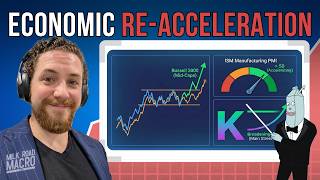
This Everything Money video, published February 07, 2026,
features Paul Gabrail
discussing QQQ, XHB, XLE, IWM, GLD, SPY.
6 trade ideas extracted by AI with direction and confidence scoring.
Speakers:
Paul Gabrail
· Tickers:
QQQ,
XHB,
XLE,
IWM,
GLD,
SPY