Warsh Faces Markets and Trump

Watch on YouTube ↗  |  September 16, 2026 at 18:51  |  32:33  |  Bloomberg Markets
Speakers
Stephen Moore — Former Trump Economic Advisor, America First Policy Institute
Charlie Pellett — Anchor/Reporter, Bloomberg
Peggy Collins — Bloomberg Washington Bureau Chief
Rick Davis — Republican Strategist, Partner at Stonecourt Capital
Kailey Leinz — Bloomberg Reporter
Joe Mathieu — Host, Bloomberg Radio

Summary

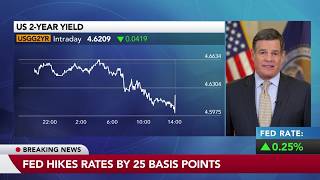
Bloomberg's Balance of Power previews the Federal Reserve's rate decision, with markets overwhelmingly pricing a 25-basis-point hike and focusing on Chair Kevin Warsh's credibility on inflation. Guests discuss the resilient consumer, high long-term yields, diesel and energy costs, midterm politics, and the economic impact of AI and data-center investment. Stephen Moore argues the U.S. economy is strong, sees no recession, and views oil prices as the key variable for Fed policy and growth.

  • Markets price a 94-95% chance of a Fed rate hike, the first since 2023.
  • Retail sales show a resilient U.S. consumer despite rising gasoline prices.
  • Long-term Treasury yields are elevated, with the 10-year near 5% and 30-year above 5.3%.
  • Political panel debates how rate hikes, diesel costs, and the Iran war affect midterm races.
  • Trucking stocks fall after JB Hunt warns on diesel and recruiting costs.
  • Stephen Moore says the U.S. economy is strong, AI and data centers are major positives, and oil prices are the main headwind.
  • Moore argues a Fed hike could lower long-term rates by anchoring inflation expectations.
Ideas
Stephen Moore Former Trump Economic Advisor, America First Policy Institute 26:19
U.S. Treasuries safest, should yield less.
Moore argues the U.S. Treasury bond is the safest investment in the world other than gold, so if properly risk-adjusted the U.S. should have the lowest interest rates. He thinks it is nonsensical that Japanese or European debt can yield less than U.S. debt, implying U.S. Treasuries are attractively priced and their yields should be lower.
Stephen Moore Former Trump Economic Advisor, America First Policy Institute 28:15
Fed hike can lower long-term yields.
Moore says the most important driver of long-term interest rates is inflation expectations. If the Fed raises short-term rates, it signals it will control inflation, which should lower inflation expectations and bring long-term rates down, making long-duration Treasuries attractive.
Stephen Moore Former Trump Economic Advisor, America First Policy Institute 28:45
Bullish U.S. economy, no recession ahead.
Moore is bullish on the U.S. economy and sees no recession. He says the economy is amazingly positive and that U.S. leadership in AI and other areas supports the outlook.
Stephen Moore Former Trump Economic Advisor, America First Policy Institute 28:47
Oil price determines Fed path.
Moore calls oil the key headwind for the U.S. economy and the Fed. He says $80 oil would allow rates to come down, while $110 oil would prevent rate cuts, and energy is the master resource that drives broader inflation.
Stephen Moore Former Trump Economic Advisor, America First Policy Institute 29:26
AI and data centers drive growth.
Moore sees AI investment and data-center construction as a huge positive for the U.S. economy. He says AI is already improving productivity in corporate America, data centers are driving a construction boom, and the U.S. must lead the AI race against China.
Up Next

This Bloomberg Markets video, published September 16, 2026, features Stephen Moore discussing TLT, long-term U.S. Treasuries, United States (economy), WTI, AI-SECTOR, DTCR. 5 trade ideas extracted by AI with direction and confidence scoring.

Speakers: Stephen Moore  · Tickers: TLT, long-term U.S. Treasuries, United States (economy), WTI, AI-SECTOR, DTCR