Trump Warns Iran 'Really Bad Things' Will Happen Without Deal
Summary
- The US has executed its largest military buildup since the 2003 invasion of Iraq, positioning significant hardware around Iran.
- President Trump has issued a warning for a deal within 10 days, though the analyst suggests this timeline may be flexible (similar to Ukraine negotiations).
- The primary military targets in a kinetic scenario would likely be Iran's ballistic missile capabilities rather than nuclear facilities or regime change.
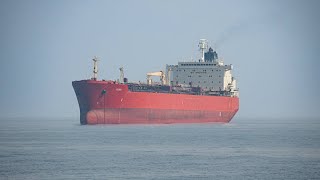
- A major risk factor is the Straits of Hormuz, where Iran has staged exercises; a conflict here would disrupt 20% of global daily oil consumption.
Ideas
"Iran... staged a military exercise in the Straits of Hormuz... that's, of course, where 20% of the world's daily oil consumption passes through... Something that brought conflict into the Gulf... would certainly disrupt supplies." While current military posturing hasn't spiked oil prices yet because supplies remain flowing, any escalation involving the Straits would immediately choke supply. Investors should long oil futures or energy equities as a hedge against a "deal failure" scenario that leads to a blockade or kinetic disruption in the Gulf. LONG oil assets as a geopolitical hedge. A "meaningful deal" is reached quickly (similar to the Gaza framework mentioned), de-escalating tensions and causing the war premium to evaporate.
"This is the largest military buildup that of American force and firepower that the world has seen since 2003... Iran still does have missile capabilities... and that would likely be the focus of any initial American strike." The sheer scale of the buildup indicates high readiness for kinetic action. If a deal isn't reached, the specific targeting of "missile capabilities" implies heavy usage of US precision munitions and air defense systems, directly benefiting defense primes and aerospace manufacturers. LONG Defense sector. Trump's "propensity to use military force" is described as "targeted," meaning a full-scale prolonged conflict (which drives long-term defense revenue) might be avoided in favor of a quick deal.
"The nature of this buildup and the lack of clarity around exactly what the objective would be... is adding to the global jitters... I think the possibility is real that we'd be looking at something that was larger, more uncertain and less contained [than previous strikes]." The analyst highlights a shift from "contained" responses (like Soleimani) to potential "unanticipated consequences" or regime collapse scenarios. This uncertainty ("global jitters") typically drives capital into safe havens (Gold) and spikes volatility indices. LONG Volatility and Safe Havens. The market currently believes the conflict won't disrupt supply; if the status quo remains "flexing" without shooting, volatility premiums will decay.
Up Next
This Bloomberg Markets video, published February 19, 2026, discussing XLE, BRENT, RTX, ITA, LMT, GLD, VIX. 3 trade ideas extracted by AI with direction and confidence scoring.