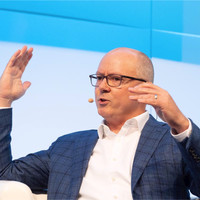
Global Head of Thematic and Sustainability Research, Morgan Stanley
·tracked since Mar 2026
224
BUZZBERGThe leaderboard is ranked by Alpha Score, which weighs a speaker's average return, their number of calls, and reputation — a credibility rating of the source that can only raise a score, never lower it.Read the FAQ
AI is driving unprecedented demand for compute, leading to a supply-demand imbalance where compute demand exceeds supply. This is a defining investment story for 2026 with significant alpha generation opportunities, as evidenced by the surge in AI token usage and the outperformance of thematic categories.
Sovereign AI fragmentation boosts infrastructure beneficiaries.
AI sovereignty fragmentation makes the system more redundant and capital-intensive because the same level of AI demand may require duplicated, localized physical infrastructure. Morgan Stanley research sees potential beneficiaries across semiconductors, data centers, networking, power, cloud, cybersecurity, and infrastructure software.
Sovereign AI fragmentation boosts infrastructure beneficiaries.
AI sovereignty fragmentation makes the system more redundant and capital-intensive because the same level of AI demand may require duplicated, localized physical infrastructure. Morgan Stanley research sees potential beneficiaries across semiconductors, data centers, networking, power, cloud, cybersecurity, and infrastructure software.
AI infrastructure selloff driven by technicals, not fundamentals
The recent sell-off in AI infrastructure stocks is driven by technical factors (profit taking, crowded positioning, forced selling), not weakening fundamentals. Enterprise spending on AI is likely to increase because the economics are compelling (cost of $2-5 to execute a task that saves $55). Efficiency improvements from competitive models, including those from China, will boost overall compute demand via Jevon's paradox rather than reduce it. Power constraints are real but manageable through on-site generation, fuel cells, storage, gas turbines and site conversions. Underlying demand for AI compute and power is strong and will continue to rise.
Bitcoin miners benefit from data center constraints.
Political pushback and permitting challenges for grid-connected data centers are causing developers to explore off-grid solutions. Bitcoin miners with existing grid access and data center infrastructure are seeing clear, strong demand for their capacity and products, positioning them to benefit from the AI data center build-out constraints.
Hyperscalers have pricing power and strong returns
Hyperscalers with compute and power have excellent token economics, a massive shortage of compute gives them pricing power, and the returns from selling tokens are excellent, making them uniquely positioned to benefit from the AI revolution.
AI energy demand strains supply, driving investments.
AI growth is directly tied to energy availability, with global data center power demand expected to increase sharply by nearly 130 gigawatt by 2028, potentially causing a 10-20% shortfall in US power availability. This, combined with geopolitical factors and a push for national self-sufficiency, makes energy security a central investment theme that has outperformed the market.
"Anybody in the infrastructure space, if you have a power bottleneck, a bottleneck, equipment bottleneck, the value of debottlenecking is going to go up as the value of AI goes up... the data center community will just take control of their own destiny, build their own mini grids that are completely separated." The US grid is constrained and permitting for new utility projects is notoriously slow. To ensure power security and avoid political backlash, hyperscalers are bypassing traditional utilities to build their own private power plants. Companies that manufacture electrical equipment (ETN), construct power infrastructure (PWR), and provide decentralized power generation like turbines and fuel cells (GEV, BE) will capture the billions in CapEx spent to build these off-grid ecosystems. LONG electrical equipment and power infrastructure providers, as they are the direct beneficiaries of hyperscalers taking control of their own power destiny. Regulatory intervention preventing the construction of private microgrids, or a macro slowdown causing hyperscalers to slash their AI infrastructure CapEx.
"Anybody in the infrastructure space, if you have a power bottleneck, a bottleneck, equipment bottleneck, the value of debottlenecking is going to go up as the value of AI goes up... the data center community will just take control of their own destiny, build their own mini grids that are completely separated." The US grid is constrained and permitting for new utility projects is notoriously slow. To ensure power security and avoid political backlash, hyperscalers are bypassing traditional utilities to build their own private power plants. Companies that manufacture electrical equipment (ETN), construct power infrastructure (PWR), and provide decentralized power generation like turbines and fuel cells (GEV, BE) will capture the billions in CapEx spent to build these off-grid ecosystems. LONG electrical equipment and power infrastructure providers, as they are the direct beneficiaries of hyperscalers taking control of their own power destiny. Regulatory intervention preventing the construction of private microgrids, or a macro slowdown causing hyperscalers to slash their AI infrastructure CapEx.
"Anybody in the infrastructure space, if you have a power bottleneck, a bottleneck, equipment bottleneck, the value of debottlenecking is going to go up as the value of AI goes up... the data center community will just take control of their own destiny, build their own mini grids that are completely separated." The US grid is constrained and permitting for new utility projects is notoriously slow. To ensure power security and avoid political backlash, hyperscalers are bypassing traditional utilities to build their own private power plants. Companies that manufacture electrical equipment (ETN), construct power infrastructure (PWR), and provide decentralized power generation like turbines and fuel cells (GEV, BE) will capture the billions in CapEx spent to build these off-grid ecosystems. LONG electrical equipment and power infrastructure providers, as they are the direct beneficiaries of hyperscalers taking control of their own power destiny. Regulatory intervention preventing the construction of private microgrids, or a macro slowdown causing hyperscalers to slash their AI infrastructure CapEx.
"Anybody in the infrastructure space, if you have a power bottleneck, a bottleneck, equipment bottleneck, the value of debottlenecking is going to go up as the value of AI goes up... the data center community will just take control of their own destiny, build their own mini grids that are completely separated." The US grid is constrained and permitting for new utility projects is notoriously slow. To ensure power security and avoid political backlash, hyperscalers are bypassing traditional utilities to build their own private power plants. Companies that manufacture electrical equipment (ETN), construct power infrastructure (PWR), and provide decentralized power generation like turbines and fuel cells (GEV, BE) will capture the billions in CapEx spent to build these off-grid ecosystems. LONG electrical equipment and power infrastructure providers, as they are the direct beneficiaries of hyperscalers taking control of their own power destiny. Regulatory intervention preventing the construction of private microgrids, or a macro slowdown causing hyperscalers to slash their AI infrastructure CapEx.
"Anybody in the infrastructure space, if you have a power bottleneck, a bottleneck, equipment bottleneck, the value of debottlenecking is going to go up as the value of AI goes up... the data center community will just take control of their own destiny, build their own mini grids that are completely separated." The US grid is constrained and permitting for new utility projects is notoriously slow. To ensure power security and avoid political backlash, hyperscalers are bypassing traditional utilities to build their own private power plants. Companies that manufacture electrical equipment (ETN), construct power infrastructure (PWR), and provide decentralized power generation like turbines and fuel cells (GEV, BE) will capture the billions in CapEx spent to build these off-grid ecosystems. LONG electrical equipment and power infrastructure providers, as they are the direct beneficiaries of hyperscalers taking control of their own power destiny. Regulatory intervention preventing the construction of private microgrids, or a macro slowdown causing hyperscalers to slash their AI infrastructure CapEx.
"Anybody in the infrastructure space, if you have a power bottleneck, a bottleneck, equipment bottleneck, the value of debottlenecking is going to go up as the value of AI goes up... the data center community will just take control of their own destiny, build their own mini grids that are completely separated." The US grid is constrained and permitting for new utility projects is notoriously slow. To ensure power security and avoid political backlash, hyperscalers are bypassing traditional utilities to build their own private power plants. Companies that manufacture electrical equipment (ETN), construct power infrastructure (PWR), and provide decentralized power generation like turbines and fuel cells (GEV, BE) will capture the billions in CapEx spent to build these off-grid ecosystems. LONG electrical equipment and power infrastructure providers, as they are the direct beneficiaries of hyperscalers taking control of their own power destiny. Regulatory intervention preventing the construction of private microgrids, or a macro slowdown causing hyperscalers to slash their AI infrastructure CapEx.
"Anybody in the infrastructure space, if you have a power bottleneck, a bottleneck, equipment bottleneck, the value of debottlenecking is going to go up as the value of AI goes up... the data center community will just take control of their own destiny, build their own mini grids that are completely separated." The US grid is constrained and permitting for new utility projects is notoriously slow. To ensure power security and avoid political backlash, hyperscalers are bypassing traditional utilities to build their own private power plants. Companies that manufacture electrical equipment (ETN), construct power infrastructure (PWR), and provide decentralized power generation like turbines and fuel cells (GEV, BE) will capture the billions in CapEx spent to build these off-grid ecosystems. LONG electrical equipment and power infrastructure providers, as they are the direct beneficiaries of hyperscalers taking control of their own power destiny. Regulatory intervention preventing the construction of private microgrids, or a macro slowdown causing hyperscalers to slash their AI infrastructure CapEx.
"Anybody in the infrastructure space, if you have a power bottleneck, a bottleneck, equipment bottleneck, the value of debottlenecking is going to go up as the value of AI goes up... the data center community will just take control of their own destiny, build their own mini grids that are completely separated." The US grid is constrained and permitting for new utility projects is notoriously slow. To ensure power security and avoid political backlash, hyperscalers are bypassing traditional utilities to build their own private power plants. Companies that manufacture electrical equipment (ETN), construct power infrastructure (PWR), and provide decentralized power generation like turbines and fuel cells (GEV, BE) will capture the billions in CapEx spent to build these off-grid ecosystems. LONG electrical equipment and power infrastructure providers, as they are the direct beneficiaries of hyperscalers taking control of their own power destiny. Regulatory intervention preventing the construction of private microgrids, or a macro slowdown causing hyperscalers to slash their AI infrastructure CapEx.
"We need renewables, but we also need a lot of natural gas... the value of the intelligence that we're essentially producing from these data centers is so incredibly high that we can absorb higher gas prices." AI data centers require massive, uninterrupted baseload power that intermittent renewables alone cannot provide. Because hyperscalers are highly profitable and price-insensitive to energy costs, natural gas demand will see a structural increase driven by off-grid data center power generation. These buyers will pay whatever it takes to keep the GPUs running, supporting higher long-term prices for the commodity. LONG natural gas as it becomes a critical, price-inelastic fuel for the AI revolution. Faster-than-expected deployment of nuclear energy (Small Modular Reactors) or significant breakthroughs in utility-scale battery storage that reduce the need for gas-fired baseload power.
"We need renewables, but we also need a lot of natural gas... the value of the intelligence that we're essentially producing from these data centers is so incredibly high that we can absorb higher gas prices." AI data centers require massive, uninterrupted baseload power that intermittent renewables alone cannot provide. Because hyperscalers are highly profitable and price-insensitive to energy costs, natural gas demand will see a structural increase driven by off-grid data center power generation. These buyers will pay whatever it takes to keep the GPUs running, supporting higher long-term prices for the commodity. LONG natural gas as it becomes a critical, price-inelastic fuel for the AI revolution. Faster-than-expected deployment of nuclear energy (Small Modular Reactors) or significant breakthroughs in utility-scale battery storage that reduce the need for gas-fired baseload power.
Stephen Byrd has 12 trade ideas tracked on Buzzberg across 12 tickers since March 2026. Ranked #224 on the Buzzberg Alpha leaderboard. Most covered: SMH, XLE, COMPUTE.
#224Ranked Speaker
#224 of 1818 voices on Buzzberg