BUZZBERGThe leaderboard is ranked by Alpha Score, which weighs a speaker's average return, their number of calls, and reputation — a credibility rating of the source that can only raise a score, never lower it.Read the FAQ
Chinoy highlights that Korea (EWY) and Taiwan (EWT) are in "much better shape" regarding current accounts due to "surging tech exports" and large surpluses. In an oil shock, countries with current account deficits usually suffer currency depreciation. However, Korea and Taiwan have massive tech-export buffers that insulate them from rising energy import costs. They are the "safe havens" within the Asian basket compared to deficit runners. LONG EWY and EWT as relative strength plays against broader EM weakness. A global recession driven by high oil prices would eventually hurt demand for tech exports.
Chinoy highlights that Korea (EWY) and Taiwan (EWT) are in "much better shape" regarding current accounts due to "surging tech exports" and large surpluses. In an oil shock, countries with current account deficits usually suffer currency depreciation. However, Korea and Taiwan have massive tech-export buffers that insulate them from rising energy import costs. They are the "safe havens" within the Asian basket compared to deficit runners. LONG EWY and EWT as relative strength plays against broader EM weakness. A global recession driven by high oil prices would eventually hurt demand for tech exports.
Chinoy highlights that Korea (EWY) and Taiwan (EWT) are in "much better shape" regarding current accounts due to "surging tech exports" and large surpluses. In an oil shock, countries with current account deficits usually suffer currency depreciation. However, Korea and Taiwan have massive tech-export buffers that insulate them from rising energy import costs. They are the "safe havens" within the Asian basket compared to deficit runners. LONG EWY and EWT as relative strength plays against broader EM weakness. A global recession driven by high oil prices would eventually hurt demand for tech exports.
Chinoy highlights that Korea (EWY) and Taiwan (EWT) are in "much better shape" regarding current accounts due to "surging tech exports" and large surpluses. In an oil shock, countries with current account deficits usually suffer currency depreciation. However, Korea and Taiwan have massive tech-export buffers that insulate them from rising energy import costs. They are the "safe havens" within the Asian basket compared to deficit runners. LONG EWY and EWT as relative strength plays against broader EM weakness. A global recession driven by high oil prices would eventually hurt demand for tech exports.
The speaker explicitly lists the sequence of a sustained shock: "Risk uncertainty and inflation. Gold goes up." Gold serves a dual purpose here: it is the primary hedge against geopolitical uncertainty (war risk) and the secondary hedge against the "sticky inflation" outcome Chinoy predicts for developed markets. LONG GLD as a portfolio stabilizer during the conflict window. A very strong US Dollar (which Chinoy also predicts) can sometimes act as a headwind for Gold prices.
The speaker explicitly lists the sequence of a sustained shock: "Risk uncertainty and inflation. Gold goes up." Gold serves a dual purpose here: it is the primary hedge against geopolitical uncertainty (war risk) and the secondary hedge against the "sticky inflation" outcome Chinoy predicts for developed markets. LONG GLD as a portfolio stabilizer during the conflict window. A very strong US Dollar (which Chinoy also predicts) can sometimes act as a headwind for Gold prices.
Chinoy argues that Developed Markets are in a "more tricky situation" because they have "much more sticky inflation." He notes the Fed has missed its 2% target for six years and that higher oil prices will affect consumer CPI expectations. Higher oil prices feed directly into headline CPI. If inflation expectations unanchor in the US, the Fed cannot cut rates and may need to remain hawkish longer. Higher-for-longer rates mathematically crush long-duration bond prices (TLT). SHORT TLT (betting on higher yields/lower bond prices) as the US consumer absorbs the inflationary oil shock. A recession triggered by the oil shock could cause a "flight to safety" into bonds, lowering yields despite inflation.
Chinoy argues that Developed Markets are in a "more tricky situation" because they have "much more sticky inflation." He notes the Fed has missed its 2% target for six years and that higher oil prices will affect consumer CPI expectations. Higher oil prices feed directly into headline CPI. If inflation expectations unanchor in the US, the Fed cannot cut rates and may need to remain hawkish longer. Higher-for-longer rates mathematically crush long-duration bond prices (TLT). SHORT TLT (betting on higher yields/lower bond prices) as the US consumer absorbs the inflationary oil shock. A recession triggered by the oil shock could cause a "flight to safety" into bonds, lowering yields despite inflation.
Chinoy states that if the conflict extends beyond two to four weeks, "storage becomes a binding constraint," leading to production shutdowns. He explicitly notes this would push crude into "triple digits." The market is currently pricing in a geopolitical risk premium, but not a structural supply removal. If storage fills up and wells are shut in, the supply curve shifts violently left. USO tracks near-term oil futures, which capture this scarcity premium immediately. LONG USO as a hedge against conflict duration exceeding the 2-week threshold. Quick de-escalation returns oil to the "structural excess supply" level of ~$60/barrel.
Chinoy states that if the conflict extends beyond two to four weeks, "storage becomes a binding constraint," leading to production shutdowns. He explicitly notes this would push crude into "triple digits." The market is currently pricing in a geopolitical risk premium, but not a structural supply removal. If storage fills up and wells are shut in, the supply curve shifts violently left. USO tracks near-term oil futures, which capture this scarcity premium immediately. LONG USO as a hedge against conflict duration exceeding the 2-week threshold. Quick de-escalation returns oil to the "structural excess supply" level of ~$60/barrel.
Chinoy warns, "The shock that could come next is a very strong dollar." He notes that as Asian currencies unravel, investors panic, and capital flows become questionable. During geopolitical crises, capital flees Emerging Markets for the safety of the US Dollar. Additionally, if US inflation stays sticky (due to oil), US rates stay high, increasing the yield appeal of the USD relative to Asian peers. LONG UUP (US Dollar Index Bullish Fund). If the US enters a severe recession or the Fed cuts rates aggressively, the dollar would weaken.
Chinoy warns, "The shock that could come next is a very strong dollar." He notes that as Asian currencies unravel, investors panic, and capital flows become questionable. During geopolitical crises, capital flees Emerging Markets for the safety of the US Dollar. Additionally, if US inflation stays sticky (due to oil), US rates stay high, increasing the yield appeal of the USD relative to Asian peers. LONG UUP (US Dollar Index Bullish Fund). If the US enters a severe recession or the Fed cuts rates aggressively, the dollar would weaken.
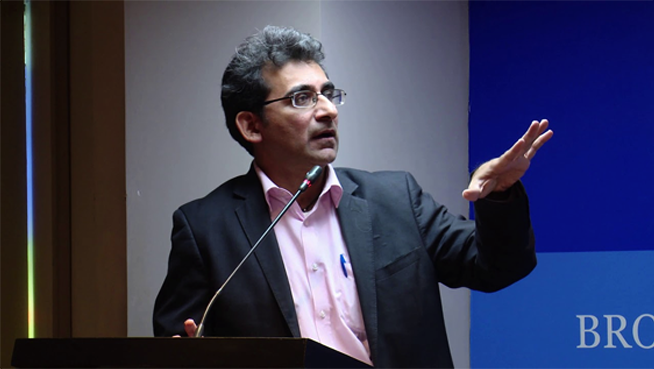
Sajjid Chinoy has 6 trade ideas tracked on Buzzberg across 6 tickers since March 2026. Ranked #153 on the Buzzberg Alpha leaderboard. Most covered: GOLD, TLT, DXY.
#153Ranked Speaker
#153 of 1343 voices on Buzzberg