BUZZBERGThe leaderboard is ranked by Alpha Score, which weighs a speaker's average return, their number of calls, and reputation — a credibility rating of the source that can only raise a score, never lower it.Read the FAQ
NVDA reported >75% gross margins and record growth, yet stock fell 5.3%. Credit analyst Schiffman calls it "the greatest print in the history of the stock market" and notes credit spreads are tightening, predicting NVDA will become a Triple-A rated issuer. There is a massive dislocation between Equity sentiment (fearing Capex saturation) and Credit reality (seeing robust cash flow and solvency). Miller confirms that AI demand is structural, not cyclical, and Hyperscalers (MSFT/META/GOOGL) are "investing capital into cash flow-generating assets." LONG. The credit market is often the "smart money." When credit spreads tighten while equity drops on a beat, it usually signals a buying opportunity in the equity once sentiment stabilizes. If the "return on investment" for AI (productivity gains) fails to materialize in non-tech sectors, the Capex cycle will collapse.
NVDA reported >75% gross margins and record growth, yet stock fell 5.3%. Credit analyst Schiffman calls it "the greatest print in the history of the stock market" and notes credit spreads are tightening, predicting NVDA will become a Triple-A rated issuer. There is a massive dislocation between Equity sentiment (fearing Capex saturation) and Credit reality (seeing robust cash flow and solvency). Miller confirms that AI demand is structural, not cyclical, and Hyperscalers (MSFT/META/GOOGL) are "investing capital into cash flow-generating assets." LONG. The credit market is often the "smart money." When credit spreads tighten while equity drops on a beat, it usually signals a buying opportunity in the equity once sentiment stabilizes. If the "return on investment" for AI (productivity gains) fails to materialize in non-tech sectors, the Capex cycle will collapse.
Intel's $15 billion stock sale and strategic investments in AI chip manufacturing, combined with strong demand for semiconductors, have stabilized its balance sheet and will fund growth, making it a home run for both equity and credit holders.
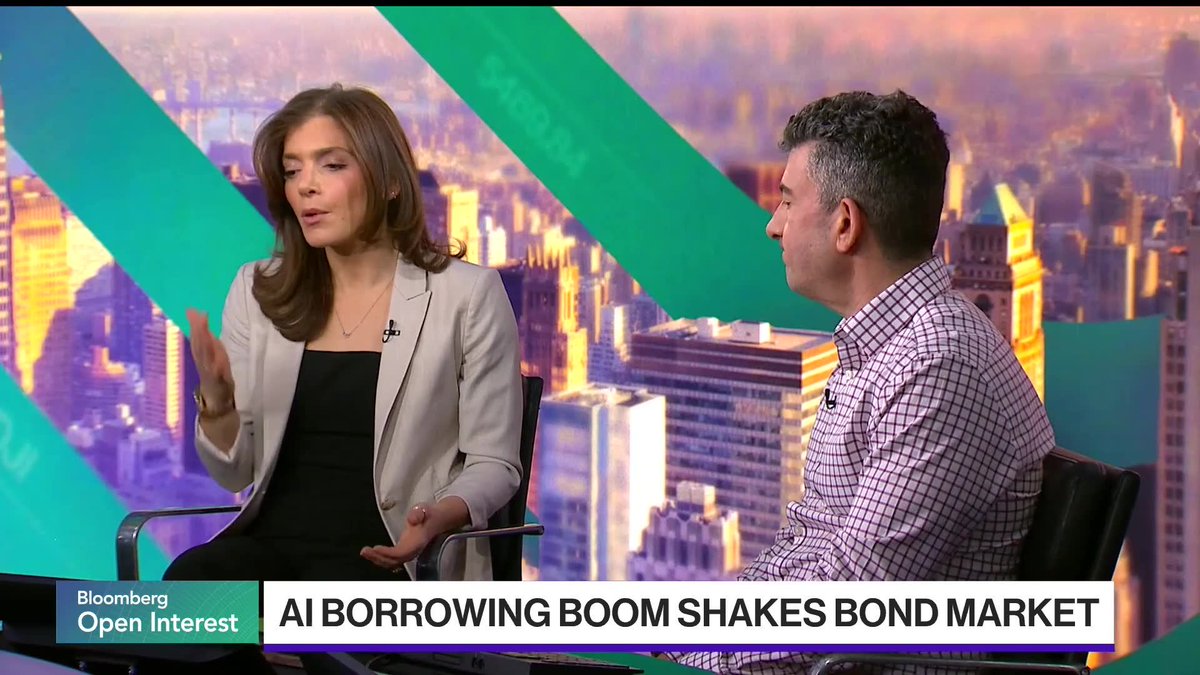
"They're printing $37 billion [in corporate bonds]... probably printing $50 billion at levels that are some 25-30 bps inside initial talk. There are buyers out there and they're in size... they're probably going to be the first company to cross $1 trillion in revenues over the next couple years." The massive oversubscription and tight pricing of Amazon's record-breaking bond issuance demonstrates absolute institutional confidence in their ability to monetize their massive AI infrastructure investments and generate unprecedented free cash flow. LONG. The credit market, which is typically much more conservative than the equity market, is aggressively validating Amazon's massive AI capex strategy. Regulatory scrutiny over cloud dominance or a broader macroeconomic slowdown that impacts AWS enterprise spending and retail margins.
"They're printing $37 billion [in corporate bonds]... probably printing $50 billion at levels that are some 25-30 bps inside initial talk. There are buyers out there and they're in size... they're probably going to be the first company to cross $1 trillion in revenues over the next couple years." The massive oversubscription and tight pricing of Amazon's record-breaking bond issuance demonstrates absolute institutional confidence in their ability to monetize their massive AI infrastructure investments and generate unprecedented free cash flow. LONG. The credit market, which is typically much more conservative than the equity market, is aggressively validating Amazon's massive AI capex strategy. Regulatory scrutiny over cloud dominance or a broader macroeconomic slowdown that impacts AWS enterprise spending and retail margins.
NVDA reported >75% gross margins and record growth, yet stock fell 5.3%. Credit analyst Schiffman calls it "the greatest print in the history of the stock market" and notes credit spreads are tightening, predicting NVDA will become a Triple-A rated issuer. There is a massive dislocation between Equity sentiment (fearing Capex saturation) and Credit reality (seeing robust cash flow and solvency). Miller confirms that AI demand is structural, not cyclical, and Hyperscalers (MSFT/META/GOOGL) are "investing capital into cash flow-generating assets." LONG. The credit market is often the "smart money." When credit spreads tighten while equity drops on a beat, it usually signals a buying opportunity in the equity once sentiment stabilizes. If the "return on investment" for AI (productivity gains) fails to materialize in non-tech sectors, the Capex cycle will collapse.
NVDA reported >75% gross margins and record growth, yet stock fell 5.3%. Credit analyst Schiffman calls it "the greatest print in the history of the stock market" and notes credit spreads are tightening, predicting NVDA will become a Triple-A rated issuer. There is a massive dislocation between Equity sentiment (fearing Capex saturation) and Credit reality (seeing robust cash flow and solvency). Miller confirms that AI demand is structural, not cyclical, and Hyperscalers (MSFT/META/GOOGL) are "investing capital into cash flow-generating assets." LONG. The credit market is often the "smart money." When credit spreads tighten while equity drops on a beat, it usually signals a buying opportunity in the equity once sentiment stabilizes. If the "return on investment" for AI (productivity gains) fails to materialize in non-tech sectors, the Capex cycle will collapse.
NVDA reported >75% gross margins and record growth, yet stock fell 5.3%. Credit analyst Schiffman calls it "the greatest print in the history of the stock market" and notes credit spreads are tightening, predicting NVDA will become a Triple-A rated issuer. There is a massive dislocation between Equity sentiment (fearing Capex saturation) and Credit reality (seeing robust cash flow and solvency). Miller confirms that AI demand is structural, not cyclical, and Hyperscalers (MSFT/META/GOOGL) are "investing capital into cash flow-generating assets." LONG. The credit market is often the "smart money." When credit spreads tighten while equity drops on a beat, it usually signals a buying opportunity in the equity once sentiment stabilizes. If the "return on investment" for AI (productivity gains) fails to materialize in non-tech sectors, the Capex cycle will collapse.
NVDA reported >75% gross margins and record growth, yet stock fell 5.3%. Credit analyst Schiffman calls it "the greatest print in the history of the stock market" and notes credit spreads are tightening, predicting NVDA will become a Triple-A rated issuer. There is a massive dislocation between Equity sentiment (fearing Capex saturation) and Credit reality (seeing robust cash flow and solvency). Miller confirms that AI demand is structural, not cyclical, and Hyperscalers (MSFT/META/GOOGL) are "investing capital into cash flow-generating assets." LONG. The credit market is often the "smart money." When credit spreads tighten while equity drops on a beat, it usually signals a buying opportunity in the equity once sentiment stabilizes. If the "return on investment" for AI (productivity gains) fails to materialize in non-tech sectors, the Capex cycle will collapse.
NVDA reported >75% gross margins and record growth, yet stock fell 5.3%. Credit analyst Schiffman calls it "the greatest print in the history of the stock market" and notes credit spreads are tightening, predicting NVDA will become a Triple-A rated issuer. There is a massive dislocation between Equity sentiment (fearing Capex saturation) and Credit reality (seeing robust cash flow and solvency). Miller confirms that AI demand is structural, not cyclical, and Hyperscalers (MSFT/META/GOOGL) are "investing capital into cash flow-generating assets." LONG. The credit market is often the "smart money." When credit spreads tighten while equity drops on a beat, it usually signals a buying opportunity in the equity once sentiment stabilizes. If the "return on investment" for AI (productivity gains) fails to materialize in non-tech sectors, the Capex cycle will collapse.
NVDA reported >75% gross margins and record growth, yet stock fell 5.3%. Credit analyst Schiffman calls it "the greatest print in the history of the stock market" and notes credit spreads are tightening, predicting NVDA will become a Triple-A rated issuer. There is a massive dislocation between Equity sentiment (fearing Capex saturation) and Credit reality (seeing robust cash flow and solvency). Miller confirms that AI demand is structural, not cyclical, and Hyperscalers (MSFT/META/GOOGL) are "investing capital into cash flow-generating assets." LONG. The credit market is often the "smart money." When credit spreads tighten while equity drops on a beat, it usually signals a buying opportunity in the equity once sentiment stabilizes. If the "return on investment" for AI (productivity gains) fails to materialize in non-tech sectors, the Capex cycle will collapse.
Big Tech is issuing record amounts of debt (e.g., Alphabet) despite having cash. Tech companies are using debt for Capex (growth) rather than buybacks. This is credit-positive because it builds future cash flow assets. Spreads are tight, but demand is overwhelming. LONG High-Grade Tech Bonds. Over-leverage if AI returns do not materialize.
Big Tech is issuing record amounts of debt (e.g., Alphabet) despite having cash. Tech companies are using debt for Capex (growth) rather than buybacks. This is credit-positive because it builds future cash flow assets. Spreads are tight, but demand is overwhelming. LONG High-Grade Tech Bonds. Over-leverage if AI returns do not materialize.
Robert Schiffman has 7 trade ideas tracked on Buzzberg across 7 tickers since February 2026. Ranked #465 on the Buzzberg Alpha leaderboard. Most covered: NVDA, AMZN, MSFT.
#465Ranked Speaker
#465 of 1796 voices on Buzzberg