BUZZBERGThe leaderboard is ranked by Alpha Score, which weighs a speaker's average return, their number of calls, and reputation — a credibility rating of the source that can only raise a score, never lower it.Read the FAQ
"This is like our fifth, you know, crypto crash... There's a lot of deleveraging that's happening, so then the market can continue to grow." The speaker views the current crash not as a fundamental failure, but as a cyclical "flush" of leverage. Historical patterns suggest that after these deleveraging events, the asset class recovers and expands as the "thesis" remains intact. LONG. Continued regulatory hostility or a failure of the asset class to recover post-deleveraging.
"This is like our fifth, you know, crypto crash... There's a lot of deleveraging that's happening, so then the market can continue to grow." The speaker views the current crash not as a fundamental failure, but as a cyclical "flush" of leverage. Historical patterns suggest that after these deleveraging events, the asset class recovers and expands as the "thesis" remains intact. LONG. Continued regulatory hostility or a failure of the asset class to recover post-deleveraging.
Belshe mentions "Larry Fink, CEO of BlackRock" saying "every asset, every bond, every token, everything can be tokenized." He lists BlackRock and Fidelity as the target client base for BitGo's infrastructure. While BitGo provides the plumbing, BlackRock is the architect of the "tokenized assets" thesis. If Belshe is right that the industry is moving toward "tokenized equities" and "better banks," BlackRock is the primary incumbent aggressively pivoting to capture this value (via ETFs and tokenized funds like BUIDL). They are the bridge between the "Galapagos" and the "Predators." LONG. BlackRock is successfully hedging its traditional business by leading the crypto adoption curve. Slow institutional adoption or reputational risk if the crypto sector suffers another catastrophic failure.
Belshe mentions "Larry Fink, CEO of BlackRock" saying "every asset, every bond, every token, everything can be tokenized." He lists BlackRock and Fidelity as the target client base for BitGo's infrastructure. While BitGo provides the plumbing, BlackRock is the architect of the "tokenized assets" thesis. If Belshe is right that the industry is moving toward "tokenized equities" and "better banks," BlackRock is the primary incumbent aggressively pivoting to capture this value (via ETFs and tokenized funds like BUIDL). They are the bridge between the "Galapagos" and the "Predators." LONG. BlackRock is successfully hedging its traditional business by leading the crypto adoption curve. Slow institutional adoption or reputational risk if the crypto sector suffers another catastrophic failure.
Mike explicitly mentions that Morgan Stanley (MS) has applied for a National Bank Charter to move into Bitcoin custody and notes Larry Fink's (BLK) vision that "every stock, every fund, every bond can be tokenized." The entry of Tier 1 banks into *custody* (not just sales) signals they are capturing the entire value chain. They are moving from "tourists" to "landlords" of the crypto ecosystem. With a friendly SEC (Paul Atkins), these banks will likely capture institutional market share from unregulated entities. Long the incumbents who are successfully pivoting to digital asset infrastructure. Regulatory reversal or failure to integrate legacy systems with blockchain tech.
Mike explicitly mentions that Morgan Stanley (MS) has applied for a National Bank Charter to move into Bitcoin custody and notes Larry Fink's (BLK) vision that "every stock, every fund, every bond can be tokenized." The entry of Tier 1 banks into *custody* (not just sales) signals they are capturing the entire value chain. They are moving from "tourists" to "landlords" of the crypto ecosystem. With a friendly SEC (Paul Atkins), these banks will likely capture institutional market share from unregulated entities. Long the incumbents who are successfully pivoting to digital asset infrastructure. Regulatory reversal or failure to integrate legacy systems with blockchain tech.
Belshe states that the "digital asset industry... is going to massively grow" because regulatory changes (specifically the "Clarity Act") have "tripled our TAM last year" and will likely "double our TAM again." He notes that Wall Street firms are now "willing and able to participate" but require regulated, public infrastructure. BitGo's IPO validates the sector, but the broader thesis is that regulatory clarity is unlocking institutional capital. Coinbase (COIN) and Robinhood (HOOD) are the primary US-listed beneficiaries of this "legitimization" wave. Robinhood is explicitly mentioned as handling 25% of the IPO allocation with "billions in demand," proving retail engagement is back. Coinbase benefits from the same "flight to quality" and market structure shift toward regulated prime services that Belshe describes. LONG. These are the "picks and shovels" for the regulated era of crypto adoption. Regulatory reversals or a failure of the "Clarity Act" to pass/implement as expected.
Belshe states that the "digital asset industry... is going to massively grow" because regulatory changes (specifically the "Clarity Act") have "tripled our TAM last year" and will likely "double our TAM again." He notes that Wall Street firms are now "willing and able to participate" but require regulated, public infrastructure. BitGo's IPO validates the sector, but the broader thesis is that regulatory clarity is unlocking institutional capital. Coinbase (COIN) and Robinhood (HOOD) are the primary US-listed beneficiaries of this "legitimization" wave. Robinhood is explicitly mentioned as handling 25% of the IPO allocation with "billions in demand," proving retail engagement is back. Coinbase benefits from the same "flight to quality" and market structure shift toward regulated prime services that Belshe describes. LONG. These are the "picks and shovels" for the regulated era of crypto adoption. Regulatory reversals or a failure of the "Clarity Act" to pass/implement as expected.
When discussing AI, Mike notes that AI models are memory/compute intensive and states, "the AI companies are all going bananas in terms of how much hardware that they're spending." A tech CEO confirming that hardware spend is accelerating ("going bananas") reinforces the thesis that the infrastructure build-out phase is nowhere near complete. This directly benefits the chip manufacturers supplying the GPUs. Long the "pick and shovel" hardware providers. Over-saturation of GPU supply or a pullback in AI CapEx by hyperscalers.
When discussing AI, Mike notes that AI models are memory/compute intensive and states, "the AI companies are all going bananas in terms of how much hardware that they're spending." A tech CEO confirming that hardware spend is accelerating ("going bananas") reinforces the thesis that the infrastructure build-out phase is nowhere near complete. This directly benefits the chip manufacturers supplying the GPUs. Long the "pick and shovel" hardware providers. Over-saturation of GPU supply or a pullback in AI CapEx by hyperscalers.
When discussing AI, Mike notes that AI models are memory/compute intensive and states, "the AI companies are all going bananas in terms of how much hardware that they're spending." A tech CEO confirming that hardware spend is accelerating ("going bananas") reinforces the thesis that the infrastructure build-out phase is nowhere near complete. This directly benefits the chip manufacturers supplying the GPUs. Long the "pick and shovel" hardware providers. Over-saturation of GPU supply or a pullback in AI CapEx by hyperscalers.
When discussing AI, Mike notes that AI models are memory/compute intensive and states, "the AI companies are all going bananas in terms of how much hardware that they're spending." A tech CEO confirming that hardware spend is accelerating ("going bananas") reinforces the thesis that the infrastructure build-out phase is nowhere near complete. This directly benefits the chip manufacturers supplying the GPUs. Long the "pick and shovel" hardware providers. Over-saturation of GPU supply or a pullback in AI CapEx by hyperscalers.
"Tokenization of real world assets, this is growing like crazy... Black Rock announcing that they plan to tokenize their shares... Uniswap and DeFi being accessed directly from traditional financial players." The convergence of TradFi and DeFi is accelerating. Large institutions (BlackRock) are not just buying crypto but migrating traditional assets (shares) onto blockchains. This benefits the asset issuers (BLK) and the DeFi infrastructure (UNI) facilitating these hybrid markets. LONG. Technical failure in smart contracts or slow institutional adoption rates.
"Tokenization of real world assets, this is growing like crazy... Black Rock announcing that they plan to tokenize their shares... Uniswap and DeFi being accessed directly from traditional financial players." The convergence of TradFi and DeFi is accelerating. Large institutions (BlackRock) are not just buying crypto but migrating traditional assets (shares) onto blockchains. This benefits the asset issuers (BLK) and the DeFi infrastructure (UNI) facilitating these hybrid markets. LONG. Technical failure in smart contracts or slow institutional adoption rates.
Belshe states that the "digital asset industry... is going to massively grow" because regulatory changes (specifically the "Clarity Act") have "tripled our TAM last year" and will likely "double our TAM again." He notes that Wall Street firms are now "willing and able to participate" but require regulated, public infrastructure. BitGo's IPO validates the sector, but the broader thesis is that regulatory clarity is unlocking institutional capital. Coinbase (COIN) and Robinhood (HOOD) are the primary US-listed beneficiaries of this "legitimization" wave. Robinhood is explicitly mentioned as handling 25% of the IPO allocation with "billions in demand," proving retail engagement is back. Coinbase benefits from the same "flight to quality" and market structure shift toward regulated prime services that Belshe describes. LONG. These are the "picks and shovels" for the regulated era of crypto adoption. Regulatory reversals or a failure of the "Clarity Act" to pass/implement as expected.
Belshe states that the "digital asset industry... is going to massively grow" because regulatory changes (specifically the "Clarity Act") have "tripled our TAM last year" and will likely "double our TAM again." He notes that Wall Street firms are now "willing and able to participate" but require regulated, public infrastructure. BitGo's IPO validates the sector, but the broader thesis is that regulatory clarity is unlocking institutional capital. Coinbase (COIN) and Robinhood (HOOD) are the primary US-listed beneficiaries of this "legitimization" wave. Robinhood is explicitly mentioned as handling 25% of the IPO allocation with "billions in demand," proving retail engagement is back. Coinbase benefits from the same "flight to quality" and market structure shift toward regulated prime services that Belshe describes. LONG. These are the "picks and shovels" for the regulated era of crypto adoption. Regulatory reversals or a failure of the "Clarity Act" to pass/implement as expected.
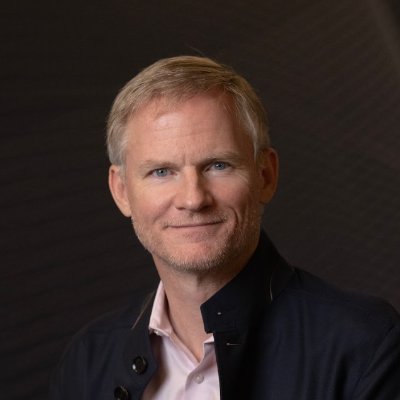
Mike Belshe has 8 trade ideas tracked on Buzzberg across 8 tickers since February 2026. Ranked #33 on the Buzzberg Alpha leaderboard. Most covered: BTC, BLK, MS.