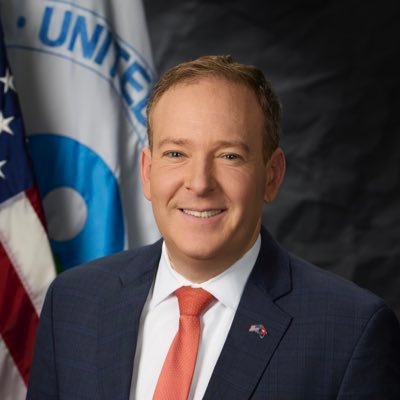

"Yes, the permitting is going much faster under President Trump... it's almost a proof of concept when, you know, Arklow in Idaho Falls, Idaho is breaking ground, which they have recently done. They want to build many more." The EPA and DOE have drastically reduced regulatory friction for nuclear power. The speaker explicitly references "Arklow" (a phonetic transcription error for Oklo Inc., which is building a reactor in Idaho Falls). This accelerated timeline directly benefits Small Modular Reactor (SMR) developers (OKLO, SMR) and the broader uranium supply chain (CCJ) by pulling forward commercialization dates, reducing compliance costs, and proving that the government will allow ground to be broken quickly. LONG. The regulatory environment for next-generation nuclear has shifted from a bureaucratic headwind to a massive, government-sponsored tailwind. Nuclear projects are notoriously prone to cost overruns and engineering delays, even with fast-tracked permits. Any safety incident at a new site could immediately reverse public and regulatory support.