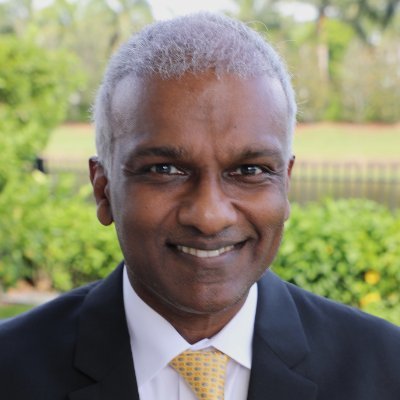
Dan Niles
Founder & Portfolio Manager, Niles Investment Management
Dan Niles is the founder and portfolio manager of Niles Investment Management, which since April 2024 has managed the Satori Fund, the technology-focused long-short equity fund he has run since its launch in 2004. After working as an engineer at Digital Equipment Corporation, he joined Robertson Stephens in 1990 as an associate in mergers and acquisitions and later became a managing director in equity research. In 2000 he moved to Lehman Brothers as a managing director leading PC hardware and semiconductor research, and as a sell-side analyst he was repeatedly named to Institutional Investor's All-America Research Team. From 2004 he was a managing director at Neuberger Berman and chief executive of Neuberger Berman Technology Management, and in 2009 he became a founding partner of AlphaOne Capital Partners, where the fund was run as the AlphaOne Satori Fund. He holds a BS in systems engineering from Boston University and an MS in electrical engineering from Stanford, and discusses large-cap technology, semiconductors and markets regularly on CNBC and Bloomberg.
Leaderboard rank
Open in leaderboard →| Horizon | 7D | 30D | 90D | 180D | 360D | AVG |
|---|---|---|---|---|---|---|
| Rank | #421 | #87 | #330 | #197 | — | #134 |
| Calls | 34 | 34 | 24 | 18 | 0/10 | 34 |
| Avg return | +0.9% | +6.4% | +3.8% | +12.8% | — | +7.1% |
| vs S&P 500 | +0.5 pp | +5.8 pp | +1.0 pp | +4.0 pp | — | +3.7 pp |
Ticker
Side
Calls
Mentions
First Call
Best call P&L
Status
Chart
Source
Loading
Showing 0 of 28 calls · sorted by mentions
Loading
Dan Niles has 30 trade ideas tracked on Buzzberg across 28 tickers since January 2026. Win rate 72% across 29 evaluated calls, average return +9.5%. Ranked #87 on Buzzberg's 30-day Authors leaderboard. Most covered: GOOGL, NVDA, AAPL.
Historical call returns are modeled from recorded ideas and stored prices, not actual brokerage portfolio returns. Check the evaluated call set and horizon; past results do not establish future prediction accuracy. Explore our data and methodology