BUZZBERGThe leaderboard is ranked by Alpha Score, which weighs a speaker's average return, their number of calls, and reputation — a credibility rating of the source that can only raise a score, never lower it.Read the FAQ
Nvidia's forward P/E ratio of 24 for the next 12 months is relatively cheap given its 70%+ revenue growth, making the stock still available to buy despite its size.
Apple is seeing iPhone demand returning to China, driven by Tim Cook's ability to navigate the Chinese consumer market and supply chain, which is a positive catalyst for the stock.
Cisco is experiencing a significant stock surge driven by its AI networking and cybersecurity push, including new in-house silicon and workforce reallocation, marking a new era for the company.
Tesla is gaining from strong sales in China (up 36%) and potential FDA clearance for self-driving, making it a key growth market and positive for the stock.
Intel could benefit from Apple processor diversification.
Apple considering Intel and Samsung to produce main processors in the U.S. to diversify away from sole dependency on TSMC, which faces geopolitical supply-chain risks. Intel stands to gain as a potential new supplier.
ARM plans to design and sell its own chips, aiming to reach $15 billion in annual sales within five years, moving beyond licensing to capture more value. This strategic pivot allows ARM to participate directly in the lucrative AI data center market, where demand is surging, potentially boosting revenue despite lower margins. LONG due to significant growth potential in AI and data centers, with ARM leveraging its low-power chip expertise. Execution challenges in chip manufacturing and increased competition from existing players like Intel and AMD.
ARM plans to design and sell its own chips, aiming to reach $15 billion in annual sales within five years, moving beyond licensing to capture more value. This strategic pivot allows ARM to participate directly in the lucrative AI data center market, where demand is surging, potentially boosting revenue despite lower margins. LONG due to significant growth potential in AI and data centers, with ARM leveraging its low-power chip expertise. Execution challenges in chip manufacturing and increased competition from existing players like Intel and AMD.
Amazon is investing heavily in OpenAI (partnering/funding) and doubling down on Anthropic, while committing to significant CapEx for chips (Trainium) and data centers. Amazon is hedging its bets across leading models (Anthropic + OpenAI) while owning the compute layer (AWS/Chips). This vertical integration captures value regardless of which model wins. LONG. Amazon is positioning itself as the unavoidable infrastructure layer for the AI economy. Antitrust scrutiny regarding its investments in AI startups.
Amazon is investing heavily in OpenAI (partnering/funding) and doubling down on Anthropic, while committing to significant CapEx for chips (Trainium) and data centers. Amazon is hedging its bets across leading models (Anthropic + OpenAI) while owning the compute layer (AWS/Chips). This vertical integration captures value regardless of which model wins. LONG. Amazon is positioning itself as the unavoidable infrastructure layer for the AI economy. Antitrust scrutiny regarding its investments in AI startups.
Block (SQ) is cutting 40% of its workforce (approx. 4,000 jobs), with Jack Dorsey explicitly stating AI allows them to replace these workers and remain efficient. The market is treating "AI replacement" as a massive margin expansion lever. The stock jumped ~16%, validating that investors prefer leaner, AI-integrated cost structures over bloated legacy tech headcounts. LONG. The "efficiency narrative" is currently a stronger driver for stock performance than pure revenue growth in the fintech sector. Regulatory backlash or operational degradation if cuts are too deep.
Block (SQ) is cutting 40% of its workforce (approx. 4,000 jobs), with Jack Dorsey explicitly stating AI allows them to replace these workers and remain efficient. The market is treating "AI replacement" as a massive margin expansion lever. The stock jumped ~16%, validating that investors prefer leaner, AI-integrated cost structures over bloated legacy tech headcounts. LONG. The "efficiency narrative" is currently a stronger driver for stock performance than pure revenue growth in the fintech sector. Regulatory backlash or operational degradation if cuts are too deep.
Warner Bros. Discovery (WBD) is reconsidering a bid from Paramount (PARA) that could supersede the existing Netflix deal. If the WBD/PARA deal goes through, Netflix likely receives a breakup fee and avoids taking on the leverage/complexity of the WBD assets. The market views "walking away with cash" as superior to "buying a declining asset." LONG. Netflix gains financial flexibility without the operational headache of legacy media assets. Regulatory approval of the WBD/PARA merger fails, forcing Netflix back to the table.
Warner Bros. Discovery (WBD) is reconsidering a bid from Paramount (PARA) that could supersede the existing Netflix deal. If the WBD/PARA deal goes through, Netflix likely receives a breakup fee and avoids taking on the leverage/complexity of the WBD assets. The market views "walking away with cash" as superior to "buying a declining asset." LONG. Netflix gains financial flexibility without the operational headache of legacy media assets. Regulatory approval of the WBD/PARA merger fails, forcing Netflix back to the table.
Anthropic (makers of Claude) announced partnerships with these specific companies. Intuit is using it for tax AI; Spotify for efficiency; Novo Nordisk for research. The market is currently rewarding "AI Adopters" who integrate best-in-class models to reduce headcount/costs (the "efficiency" narrative). These partnerships signal these firms are successfully navigating the AI transition rather than being displaced by it. LONG. These stocks are bouncing on the "AI partnership" halo effect. If AI integration becomes a commodity, these companies lose pricing power (the "race to the bottom" on software pricing).
Anthropic (makers of Claude) announced partnerships with these specific companies. Intuit is using it for tax AI; Spotify for efficiency; Novo Nordisk for research. The market is currently rewarding "AI Adopters" who integrate best-in-class models to reduce headcount/costs (the "efficiency" narrative). These partnerships signal these firms are successfully navigating the AI transition rather than being displaced by it. LONG. These stocks are bouncing on the "AI partnership" halo effect. If AI integration becomes a commodity, these companies lose pricing power (the "race to the bottom" on software pricing).
Anthropic (makers of Claude) announced partnerships with these specific companies. Intuit is using it for tax AI; Spotify for efficiency; Novo Nordisk for research. The market is currently rewarding "AI Adopters" who integrate best-in-class models to reduce headcount/costs (the "efficiency" narrative). These partnerships signal these firms are successfully navigating the AI transition rather than being displaced by it. LONG. These stocks are bouncing on the "AI partnership" halo effect. If AI integration becomes a commodity, these companies lose pricing power (the "race to the bottom" on software pricing).
Anthropic (makers of Claude) announced partnerships with these specific companies. Intuit is using it for tax AI; Spotify for efficiency; Novo Nordisk for research. The market is currently rewarding "AI Adopters" who integrate best-in-class models to reduce headcount/costs (the "efficiency" narrative). These partnerships signal these firms are successfully navigating the AI transition rather than being displaced by it. LONG. These stocks are bouncing on the "AI partnership" halo effect. If AI integration becomes a commodity, these companies lose pricing power (the "race to the bottom" on software pricing).
Anthropic (makers of Claude) announced partnerships with these specific companies. Intuit is using it for tax AI; Spotify for efficiency; Novo Nordisk for research. The market is currently rewarding "AI Adopters" who integrate best-in-class models to reduce headcount/costs (the "efficiency" narrative). These partnerships signal these firms are successfully navigating the AI transition rather than being displaced by it. LONG. These stocks are bouncing on the "AI partnership" halo effect. If AI integration becomes a commodity, these companies lose pricing power (the "race to the bottom" on software pricing).
Anthropic (makers of Claude) announced partnerships with these specific companies. Intuit is using it for tax AI; Spotify for efficiency; Novo Nordisk for research. The market is currently rewarding "AI Adopters" who integrate best-in-class models to reduce headcount/costs (the "efficiency" narrative). These partnerships signal these firms are successfully navigating the AI transition rather than being displaced by it. LONG. These stocks are bouncing on the "AI partnership" halo effect. If AI integration becomes a commodity, these companies lose pricing power (the "race to the bottom" on software pricing).
Anthropic (makers of Claude) announced partnerships with these specific companies. Intuit is using it for tax AI; Spotify for efficiency; Novo Nordisk for research. The market is currently rewarding "AI Adopters" who integrate best-in-class models to reduce headcount/costs (the "efficiency" narrative). These partnerships signal these firms are successfully navigating the AI transition rather than being displaced by it. LONG. These stocks are bouncing on the "AI partnership" halo effect. If AI integration becomes a commodity, these companies lose pricing power (the "race to the bottom" on software pricing).
Anthropic (makers of Claude) announced partnerships with these specific companies. Intuit is using it for tax AI; Spotify for efficiency; Novo Nordisk for research. The market is currently rewarding "AI Adopters" who integrate best-in-class models to reduce headcount/costs (the "efficiency" narrative). These partnerships signal these firms are successfully navigating the AI transition rather than being displaced by it. LONG. These stocks are bouncing on the "AI partnership" halo effect. If AI integration becomes a commodity, these companies lose pricing power (the "race to the bottom" on software pricing).
Anthropic (makers of Claude) announced partnerships with these specific companies. Intuit is using it for tax AI; Spotify for efficiency; Novo Nordisk for research. The market is currently rewarding "AI Adopters" who integrate best-in-class models to reduce headcount/costs (the "efficiency" narrative). These partnerships signal these firms are successfully navigating the AI transition rather than being displaced by it. LONG. These stocks are bouncing on the "AI partnership" halo effect. If AI integration becomes a commodity, these companies lose pricing power (the "race to the bottom" on software pricing).
Anthropic (makers of Claude) announced partnerships with these specific companies. Intuit is using it for tax AI; Spotify for efficiency; Novo Nordisk for research. The market is currently rewarding "AI Adopters" who integrate best-in-class models to reduce headcount/costs (the "efficiency" narrative). These partnerships signal these firms are successfully navigating the AI transition rather than being displaced by it. LONG. These stocks are bouncing on the "AI partnership" halo effect. If AI integration becomes a commodity, these companies lose pricing power (the "race to the bottom" on software pricing).
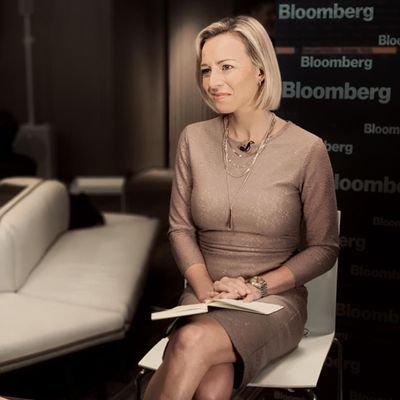
Caroline Hyde has 14 trade ideas tracked on Buzzberg across 14 tickers since February 2026. Ranked #128 on the Buzzberg Alpha leaderboard. Most covered: AMZN, NVO, CRM.
#128Ranked Speaker
#128 of 1796 voices on Buzzberg