Explicit desire to "avoid any such confrontation" with China. Apple (AAPL) and Tesla (TSLA) have the highest exposure to US-China supply chains and consumer markets. Their stocks suffer most when war rhetoric heats up. A policy stance focused on avoidance and status quo maintenance reduces the risk of retaliatory sanctions or supply chain ruptures. LONG. "Economic positioning" could still involve trade wars or tariffs that hurt these companies, even if kinetic war is avoided.
Explicit desire to "avoid any such confrontation" with China. Apple (AAPL) and Tesla (TSLA) have the highest exposure to US-China supply chains and consumer markets. Their stocks suffer most when war rhetoric heats up. A policy stance focused on avoidance and status quo maintenance reduces the risk of retaliatory sanctions or supply chain ruptures. LONG. "Economic positioning" could still involve trade wars or tariffs that hurt these companies, even if kinetic war is avoided.
Explicit desire to "avoid any such confrontation" with China. Apple (AAPL) and Tesla (TSLA) have the highest exposure to US-China supply chains and consumer markets. Their stocks suffer most when war rhetoric heats up. A policy stance focused on avoidance and status quo maintenance reduces the risk of retaliatory sanctions or supply chain ruptures. LONG. "Economic positioning" could still involve trade wars or tariffs that hurt these companies, even if kinetic war is avoided.
Explicit desire to "avoid any such confrontation" with China. Apple (AAPL) and Tesla (TSLA) have the highest exposure to US-China supply chains and consumer markets. Their stocks suffer most when war rhetoric heats up. A policy stance focused on avoidance and status quo maintenance reduces the risk of retaliatory sanctions or supply chain ruptures. LONG. "Economic positioning" could still involve trade wars or tariffs that hurt these companies, even if kinetic war is avoided.
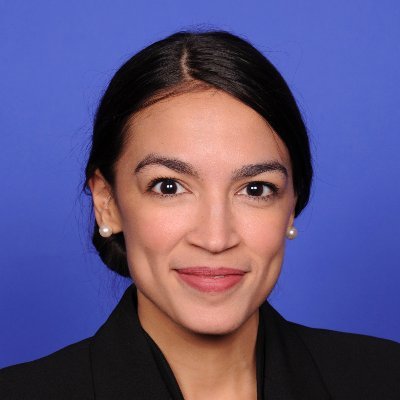
AOC states the US goal is to "avoid any such confrontation" and ensure the question of committing troops "never arises." The primary valuation drag on Taiwan Semiconductor (TSM) is the "geopolitical risk premium"—the fear that the US and China are on an inevitable collision course. If US leadership prioritizes de-escalation and stability over drawing red lines, the immediate probability of kinetic war decreases. A lower probability of war allows TSM to trade on its fundamental AI dominance rather than geopolitical fear. LONG. Stability is the most bullish factor for Taiwan assets. China interprets US reluctance as weakness and accelerates aggressive timelines; economic deterrence fails.
AOC states the US goal is to "avoid any such confrontation" and ensure the question of committing troops "never arises." The primary valuation drag on Taiwan Semiconductor (TSM) is the "geopolitical risk premium"—the fear that the US and China are on an inevitable collision course. If US leadership prioritizes de-escalation and stability over drawing red lines, the immediate probability of kinetic war decreases. A lower probability of war allows TSM to trade on its fundamental AI dominance rather than geopolitical fear. LONG. Stability is the most bullish factor for Taiwan assets. China interprets US reluctance as weakness and accelerates aggressive timelines; economic deterrence fails.