BUZZBERGThe leaderboard is ranked by Alpha Score, which weighs a speaker's average return, their number of calls, and reputation — a credibility rating of the source that can only raise a score, never lower it.Read the FAQ
"What can we do to together jointly strengthen our military there?" regarding Eastern Europe and the Arctic (8:32). He describes a multi-front security environment (Russia/Ukraine, Middle East) and observes warfare is moving "into a completely different level" dominated by drones and airpower (14:23). The speaker is describing a permanent elevation of geopolitical tensions and a consequent need for NATO and allied nations (Finland, UK, Nordics) to "strengthen" their military capabilities. This is not a temporary crisis but a shift in the global security architecture ("Hobbesian world"). This environment justifies sustained and likely increased defense budgets across Western nations, directly benefiting prime defense contractors. His note on the changing character of war (drones, airpower) highlights areas where these companies are heavily invested. LONG major U.S. defense contractors as proxies for increased and sustained Western defense expenditure driven by the multi-theater threat environment he describes. Political pressure in the U.S. or Europe to reduce spending, especially if conflicts de-escalate simultaneously. Execution risks and cost overruns on specific defense programs.
"What can we do to together jointly strengthen our military there?" regarding Eastern Europe and the Arctic (8:32). He describes a multi-front security environment (Russia/Ukraine, Middle East) and observes warfare is moving "into a completely different level" dominated by drones and airpower (14:23). The speaker is describing a permanent elevation of geopolitical tensions and a consequent need for NATO and allied nations (Finland, UK, Nordics) to "strengthen" their military capabilities. This is not a temporary crisis but a shift in the global security architecture ("Hobbesian world"). This environment justifies sustained and likely increased defense budgets across Western nations, directly benefiting prime defense contractors. His note on the changing character of war (drones, airpower) highlights areas where these companies are heavily invested. LONG major U.S. defense contractors as proxies for increased and sustained Western defense expenditure driven by the multi-theater threat environment he describes. Political pressure in the U.S. or Europe to reduce spending, especially if conflicts de-escalate simultaneously. Execution risks and cost overruns on specific defense programs.
"And I'm also positively surprised to see what Iran is able to do... we have to understand that it's a change war... the price of oil, price of gasoline... that might sort of, you know, tip the bucket... I have heard people saying that it could be potentially more serious than Covid." The speaker explicitly links the conflict to oil price risk, identifying it as a key lever for Iran to harm the global economy and a political pressure point in the U.S. The assessment that the situation could be "more serious than Covid" underscores a high-impact, low-probability tail risk for energy supply. A protracted or escalating conflict directly threatens the Strait of Hormuz, a critical chokepoint for ~20% of global oil trade, which would spike prices. A LONG position in USO (United States Oil Fund) is a direct hedge against escalating conflict in the Middle East disrupting supply and driving oil prices higher, which the speaker identifies as a primary economic and political risk. A swift de-escalation or ceasefire, as called for by the speaker, would rapidly remove the geopolitical risk premium from oil prices. Increased U.S. shale production or strategic reserve releases could also cap prices.
"And I'm also positively surprised to see what Iran is able to do... we have to understand that it's a change war... the price of oil, price of gasoline... that might sort of, you know, tip the bucket... I have heard people saying that it could be potentially more serious than Covid." The speaker explicitly links the conflict to oil price risk, identifying it as a key lever for Iran to harm the global economy and a political pressure point in the U.S. The assessment that the situation could be "more serious than Covid" underscores a high-impact, low-probability tail risk for energy supply. A protracted or escalating conflict directly threatens the Strait of Hormuz, a critical chokepoint for ~20% of global oil trade, which would spike prices. A LONG position in USO (United States Oil Fund) is a direct hedge against escalating conflict in the Middle East disrupting supply and driving oil prices higher, which the speaker identifies as a primary economic and political risk. A swift de-escalation or ceasefire, as called for by the speaker, would rapidly remove the geopolitical risk premium from oil prices. Increased U.S. shale production or strategic reserve releases could also cap prices.
"We are now moving towards the warfare, which is quite different from what it used to be... now we've moved into a completely different level where we're seeing, you know, airspace and others being dominated by drones... if we were to move to a world where it was conducted by robots, by A.I., by unmanned vehicles... it would be less dangerous... we would be destroying machines." The speaker, a noted defense scholar, observes a definitive shift in modern combat away from trench warfare and toward air, drone, and AI-dominated battlefields. This validates and accelerates existing military investment trends. Major U.S. defense contractors are at the forefront of developing these advanced unmanned systems, sensors, and AI-enabled warfare technology. Increased global instability and this technological arms race directly benefit their order books. A LONG position in leading U.S. defense primes (LMT, RTX, NOC) capitalizes on the secular trend toward high-tech, unmanned, and AI-driven warfare that the current conflicts are highlighting and accelerating. This is reinforced by the speaker's call for NATO and regional alliances (like JEF) to strengthen their military capabilities. Political pressure for defense budget cuts, especially in Europe. A sudden, comprehensive diplomatic resolution to major conflicts could dampen the perceived urgency for new spending. Execution risks and cost overruns on complex new programs.
"We are now moving towards the warfare, which is quite different from what it used to be... now we've moved into a completely different level where we're seeing, you know, airspace and others being dominated by drones... if we were to move to a world where it was conducted by robots, by A.I., by unmanned vehicles... it would be less dangerous... we would be destroying machines." The speaker, a noted defense scholar, observes a definitive shift in modern combat away from trench warfare and toward air, drone, and AI-dominated battlefields. This validates and accelerates existing military investment trends. Major U.S. defense contractors are at the forefront of developing these advanced unmanned systems, sensors, and AI-enabled warfare technology. Increased global instability and this technological arms race directly benefit their order books. A LONG position in leading U.S. defense primes (LMT, RTX, NOC) capitalizes on the secular trend toward high-tech, unmanned, and AI-driven warfare that the current conflicts are highlighting and accelerating. This is reinforced by the speaker's call for NATO and regional alliances (like JEF) to strengthen their military capabilities. Political pressure for defense budget cuts, especially in Europe. A sudden, comprehensive diplomatic resolution to major conflicts could dampen the perceived urgency for new spending. Execution risks and cost overruns on complex new programs.
"We are now moving towards the warfare, which is quite different from what it used to be... now we've moved into a completely different level where we're seeing, you know, airspace and others being dominated by drones... if we were to move to a world where it was conducted by robots, by A.I., by unmanned vehicles... it would be less dangerous... we would be destroying machines." The speaker, a noted defense scholar, observes a definitive shift in modern combat away from trench warfare and toward air, drone, and AI-dominated battlefields. This validates and accelerates existing military investment trends. Major U.S. defense contractors are at the forefront of developing these advanced unmanned systems, sensors, and AI-enabled warfare technology. Increased global instability and this technological arms race directly benefit their order books. A LONG position in leading U.S. defense primes (LMT, RTX, NOC) capitalizes on the secular trend toward high-tech, unmanned, and AI-driven warfare that the current conflicts are highlighting and accelerating. This is reinforced by the speaker's call for NATO and regional alliances (like JEF) to strengthen their military capabilities. Political pressure for defense budget cuts, especially in Europe. A sudden, comprehensive diplomatic resolution to major conflicts could dampen the perceived urgency for new spending. Execution risks and cost overruns on complex new programs.
"We are now moving towards the warfare, which is quite different from what it used to be... now we've moved into a completely different level where we're seeing, you know, airspace and others being dominated by drones... if we were to move to a world where it was conducted by robots, by A.I., by unmanned vehicles... it would be less dangerous... we would be destroying machines." The speaker, a noted defense scholar, observes a definitive shift in modern combat away from trench warfare and toward air, drone, and AI-dominated battlefields. This validates and accelerates existing military investment trends. Major U.S. defense contractors are at the forefront of developing these advanced unmanned systems, sensors, and AI-enabled warfare technology. Increased global instability and this technological arms race directly benefit their order books. A LONG position in leading U.S. defense primes (LMT, RTX, NOC) capitalizes on the secular trend toward high-tech, unmanned, and AI-driven warfare that the current conflicts are highlighting and accelerating. This is reinforced by the speaker's call for NATO and regional alliances (like JEF) to strengthen their military capabilities. Political pressure for defense budget cuts, especially in Europe. A sudden, comprehensive diplomatic resolution to major conflicts could dampen the perceived urgency for new spending. Execution risks and cost overruns on complex new programs.
"It's about inflation. It could be about interest rates" (12:16). He connects oil price spikes from the Middle East conflict directly to inflationary pressures and, by extension, central bank policy. The speaker provides a clear causal chain: Conflict -> Oil Disruption -> Higher Oil Prices -> Inflation -> Potential for Higher Interest Rates. As a sovereign bond, TLT (long-dated U.S. Treasuries) is highly sensitive to inflation expectations and interest rate trajectories. A reignition of inflation from an energy shock would put downward pressure on bond prices (yields would rise). This is a "bad for bonds" macro inference from his analysis. SHORT TLT as a play on the re-emergence of inflation risks and the potential for a "higher for longer" interest rate environment, as implied by the conflict's economic impact. If the conflict triggers a severe recession *without* sustained inflation, a flight-to-quality bid could rally Treasuries (TLT would rise). A swift resolution of the conflict would remove the inflationary impetus.
"It's about inflation. It could be about interest rates" (12:16). He connects oil price spikes from the Middle East conflict directly to inflationary pressures and, by extension, central bank policy. The speaker provides a clear causal chain: Conflict -> Oil Disruption -> Higher Oil Prices -> Inflation -> Potential for Higher Interest Rates. As a sovereign bond, TLT (long-dated U.S. Treasuries) is highly sensitive to inflation expectations and interest rate trajectories. A reignition of inflation from an energy shock would put downward pressure on bond prices (yields would rise). This is a "bad for bonds" macro inference from his analysis. SHORT TLT as a play on the re-emergence of inflation risks and the potential for a "higher for longer" interest rate environment, as implied by the conflict's economic impact. If the conflict triggers a severe recession *without* sustained inflation, a flight-to-quality bid could rally Treasuries (TLT would rise). A swift resolution of the conflict would remove the inflationary impetus.
"We're seeing now increased oil prices, which basically feed the Russian war machinery... It's about inflation. It could be about interest rates... when you sort of stop 20% of trade in a certain area, it's going to hit all of us" (5:22, 12:16). "I have heard people saying that it could be potentially more serious than Covid" (11:46). The speaker, a head of state with security insight, frames the Middle East conflict as a severe, ongoing threat to global oil flows through the Strait of Hormuz. His grave economic warning ("more serious than Covid") and explicit link between conflict escalation and oil price increases suggest a high probability of sustained or rising energy price volatility. This creates a macro tailwind for the price of oil and the companies that produce it. A LONG position in broad oil exposure (USO for futures, XLE for equities) is a direct hedge against the geopolitical risk he outlines and a bet on the conflict's continued pressure on energy supply. A successful de-escalation and ceasefire, which the President advocates for, could rapidly deflate the geopolitical risk premium in oil prices. A significant global economic downturn could also destroy demand, outweighing supply concerns.
"We're seeing now increased oil prices, which basically feed the Russian war machinery... It's about inflation. It could be about interest rates... when you sort of stop 20% of trade in a certain area, it's going to hit all of us" (5:22, 12:16). "I have heard people saying that it could be potentially more serious than Covid" (11:46). The speaker, a head of state with security insight, frames the Middle East conflict as a severe, ongoing threat to global oil flows through the Strait of Hormuz. His grave economic warning ("more serious than Covid") and explicit link between conflict escalation and oil price increases suggest a high probability of sustained or rising energy price volatility. This creates a macro tailwind for the price of oil and the companies that produce it. A LONG position in broad oil exposure (USO for futures, XLE for equities) is a direct hedge against the geopolitical risk he outlines and a bet on the conflict's continued pressure on energy supply. A successful de-escalation and ceasefire, which the President advocates for, could rapidly deflate the geopolitical risk premium in oil prices. A significant global economic downturn could also destroy demand, outweighing supply concerns.
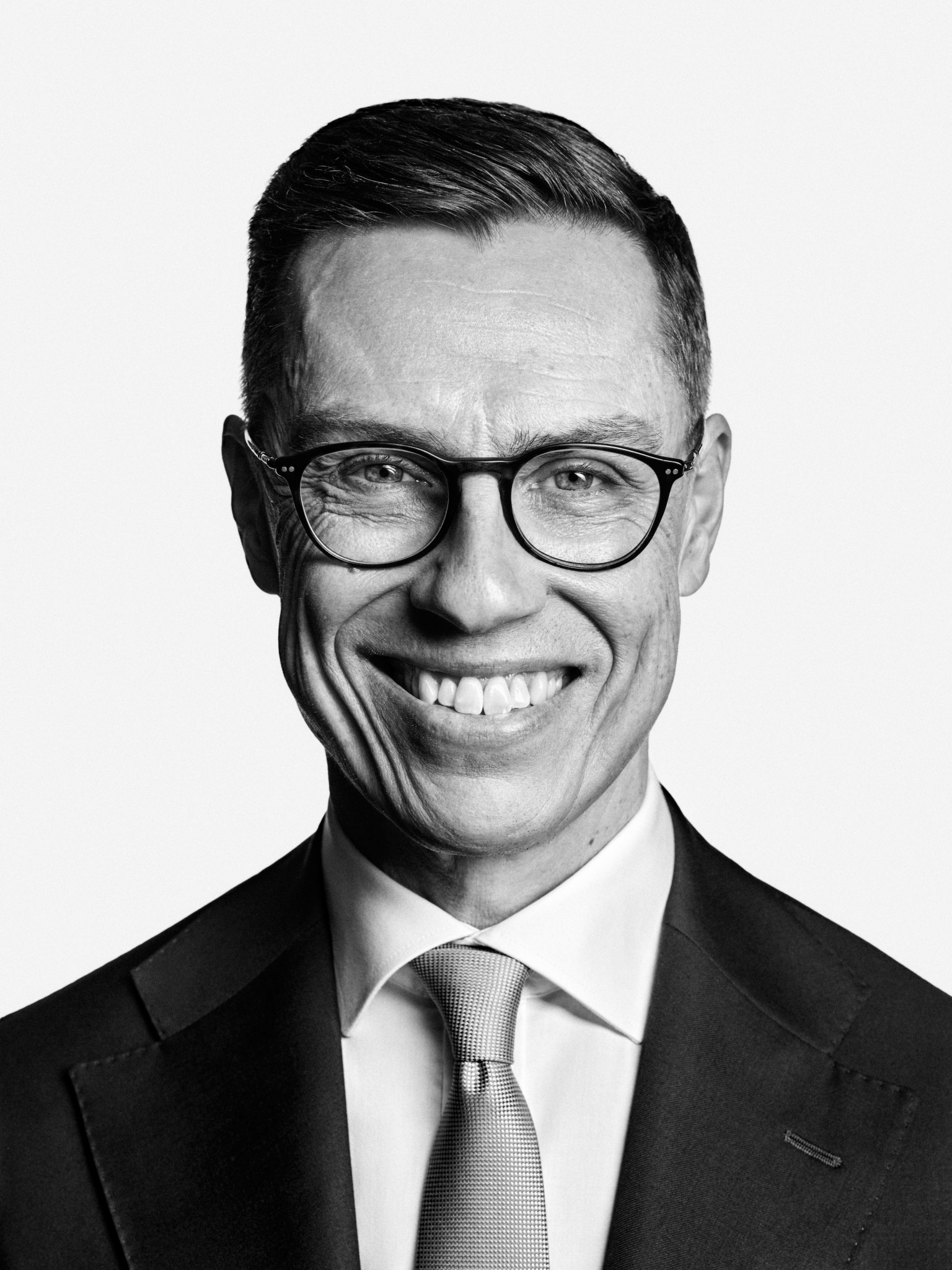
Alexander Stubb has 6 trade ideas tracked on Buzzberg across 6 tickers since March 2026. Ranked #930 on the Buzzberg Alpha leaderboard. Most covered: BNO, NOC, XLE.
#930Ranked Speaker
#930 of 1818 voices on Buzzberg