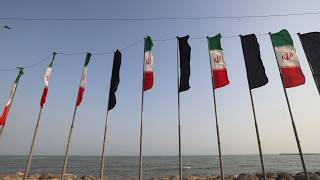
Iran Pressure Campaign Lacks Clear Off Ramp

Watch on YouTube ↗  |  August 16, 2026 at 12:59  |  13:13  |  Bloomberg Markets
Speakers
Robert Harward — Retired Vice Admiral, former CENTCOM Deputy Commander
Jen Gavito — Acting Principal Deputy Assistant Secretary, Bureau of Near Eastern Affairs

Summary

Bloomberg This Weekend discusses the US maximum pressure campaign against Iran with Jen Gavito and retired Vice Adm. Robert Harward. Gavito argues sanctions alone are unlikely to change Iran's calculus or provide an off-ramp, while Harward says combined economic, political, and military pressure can weaken Tehran. The conversation highlights elevated Strait of Hormuz risk, Iran's economic decline, and a shift toward drone-based warfare over legacy carrier and jet platforms.

  • US pressure on Iran is expected to intensify, with possible moves on frozen assets, Chinese banks, and the ghost fleet.
  • Jen Gavito sees the maximum pressure campaign as an effective tool but not a strategy, with no clear off-ramp.
  • Iran is described as negotiating from strength and viewing the Strait of Hormuz as a strategic lever.
  • Robert Harward argues a whole-of-government effort could weaken Tehran and raise regime risk.
  • Harward says drones have changed warfare and will be a primary element of future defense spending.
  • Gavito says Iran's regime is deeply unpopular but lacks the conditions for an immediate uprising.
Ideas
Jen Gavito Acting Principal Deputy Assistant Secretary, Bureau of Near Eastern Affairs 6:25
Sanctions keep undermining Iran's economy.
Iran is negotiating from a position of power after withstanding a major military onslaught, and the economic pressure tools being discussed—sanctions, Chinese bank measures, shadow fleet actions, exchange house restrictions—will continue to undermine and diminish Iran's economy. However, she does not expect these measures to shift Iran's red lines or end the war on their own.
Jen Gavito Acting Principal Deputy Assistant Secretary, Bureau of Near Eastern Affairs 10:20
Strait of Hormuz risk stays elevated.
Iran sees the Strait of Hormuz as an enormous strategic lever and will hold on to it at all costs; the conflict has devolved into a standoff over the strait, so transit and supply disruption risk remains elevated until both sides accept a negotiated off-ramp.
Robert Harward Retired Vice Admiral, former CENTCOM Deputy Commander 12:18
Drones replace carriers and jets in warfare.
Warfare is undergoing an unprecedented shift: despite decades of US investment in aircraft carriers and manned jets, Ukraine and Iran have used mass, low-cost drones to change battlefield dynamics and hold off superpowers. Harward argues drones—some Russian-supplied, some self-built, some Chinese-supported—will be a primary element of future warfare, so defense strategy and spending must realign away from legacy carrier and jet platforms.
Robert Harward Retired Vice Admiral, former CENTCOM Deputy Commander 12:18
Drones replace carriers and jets in warfare.
Warfare is undergoing an unprecedented shift: despite decades of US investment in aircraft carriers and manned jets, Ukraine and Iran have used mass, low-cost drones to change battlefield dynamics and hold off superpowers. Harward argues drones—some Russian-supplied, some self-built, some Chinese-supported—will be a primary element of future warfare, so defense strategy and spending must realign away from legacy carrier and jet platforms.
Up Next

This Bloomberg Markets video, published August 16, 2026, features Jen Gavito, Robert Harward discussing IRAN, Strait of Hormuz transit, Drones / unmanned systems, Aircraft carriers and manned fighter jets. 4 trade ideas extracted by AI with direction and confidence scoring.

Speakers: Jen Gavito, Robert Harward  · Tickers: IRAN, Strait of Hormuz transit, Drones / unmanned systems, Aircraft carriers and manned fighter jets