Apple Price Hikes Rattle Tech, Europe's Record Heat Wave | The Pulse 6/26/2026
Summary
Tech stocks sold off as Apple component-cost-driven price hikes and a possible OpenAI IPO delay raised concerns about AI demand and chip rally sustainability. Goldman Sachs' asset allocation head recommended diversifying from crowded semiconductors into hyperscalers, while KKR's European private equity co-head highlighted opportunities in European private equity and defense. JPMorgan's climate chief described structural investment trends in European grids and nuclear. Qualcomm's CEO detailed a path to $5-15 billion in data center AI revenue. Other topics included European heat wave impacts on Rhine shipping, VW job cuts, and Chinese auto inroads.
- Global tech sell-off on Apple price increases and OpenAI IPO delay fears.
- Goldman Sachs strategist advocates shifting from semiconductors to hyperscalers within the AI theme.
- KKR sees European private equity and defense/sovereignty spending as multi-year opportunities.
- JPMorgan climate head predicts over $1 trillion European grid investment and nuclear renaissance.
- Qualcomm CEO projects $5bn data center AI revenue by 2027, scaling to $15bn by 2029.
- Record European heat wave strains Rhine water levels, threatening diesel supply.
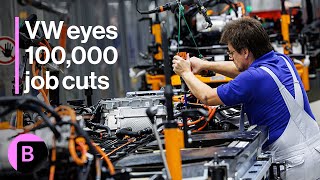
- Volkswagen reportedly plans up to 100,000 job cuts; Chinese auto brands capture 10% of Europe.
- Naples emerges as a growing Italian tech hub attracting EU investments and talent.
Ideas
Up Next



This Bloomberg Markets video, published June 26, 2026, features Christian Mueller-Glissmann, Philipp Freise, Sarah Kapnick, Cristiano Amon discussing SKYY, SMH, European private equity, DFNS, URA, European electrical grid infrastructure, QCOM. 7 trade ideas extracted by AI with direction and confidence scoring.
Speakers: Christian Mueller-Glissmann, Philipp Freise, Sarah Kapnick, Cristiano Amon · Tickers: SKYY, SMH, European private equity, DFNS, URA, European electrical grid infrastructure, QCOM