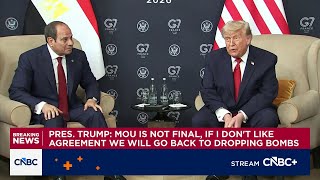
The U.S.-Iran MoU gives away a lot of U.S. leverage: Former nuclear weapons inspector David Albright
Speakers
David Albright
— President, Institute for Science and International Security; former nuclear weapons inspector
Summary
Former nuclear weapons inspector David Albright analyzes the U.S.-Iran memorandum of understanding, arguing it gives away U.S. leverage, contains weak nuclear language that Iran can exploit, and may involve secret side deals. He stresses that Iran must face robust IAEA inspections and that military conflict could resume if Iran fails to comply, contributing to ongoing instability.
- Albright criticizes the MOU for ceding U.S. leverage and paying a high price just to open the Strait of Hormuz.
- The nuclear language only uses 'produce' instead of broader terms like develop, test, or manufacture, creating loopholes.
- The phrase 'mutually agreed upon' could exclude robust IAEA inspections, a longstanding Iranian objection.
- Secret side deals may hide further problems and weaknesses, as seen in the 2015 JCPOA.
- He argues for clear, tough language and warns that military strikes may need to resume if Iran doesn't perform.
- The MOU reinforces an unstable situation that is not good for the economy, with the threat of resumed conflict.