[#Emergency Interview] Bold Outlook... After Today's Stock Price Surge, the Korean Stock Market Will Flow Like This. | Eugene Investment & Securities Executive Director Heo Jae-hwan
Summary
Heo Jae-hwan, Executive Director at Eugene Investment & Securities, analyzes the Korean stock market after a sharp sell-off and one-day surge. He sees the recent drop as forced mechanical selling that has climaxed, expecting KOSPI to rapidly recover to 2,700, then grind higher toward 2,850 this year and 3,100 next year. He anticipates a leadership broadening from memory chips into semiconductor equipment, parts, materials, and energy infrastructure, which will also lift the lagging KOSDAQ. He recommends Samsung Electronics for a re-rating in H2 and views the S&P 500 as a better alternative to the overly concentrated KOSPI 200.
- KOSPI sell-off was driven by forced stop-losses and mechanical selling below 2,700; a quick bounce to 2,700 is expected, with a slower climb toward 2,850 in 2023 and 3,100 in 2024.
- Samsung Electronics is set for a re-rating in H2 because absolute earnings are substantially higher, even as profit growth decelerates.
- The semiconductor-led rally will broaden from memory chips to equipment first, then parts and materials, as capex shifts to volume-driven capacity expansion.
- Power and energy infrastructure (renewables, gas, nuclear) will be essential co-beneficiaries of data center buildouts, with nuclear eventually catching up despite domestic skepticism.
- The KOSDAQ market, which has suffered severely, is positioned to benefit from the trickle-down effect if the broadening theme plays out.
- KOSPI 200 ETF is too concentrated in Samsung and SK hynix; S&P 500 provides better diversification and is a more comfortable equity holding during volatile markets.
- Investors stuck at high points should reduce concentrated memory holdings and diversify into semiconductor equipment, energy infrastructure, and even banks for stability.
Ideas
Up Next


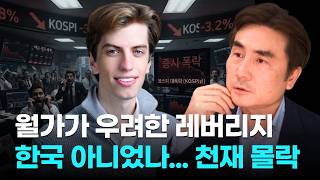
This 815 Money Talk (815머니톡) video, published July 31, 2026, features Heo Jae-hwan discussing 005930.KS, SPY. 2 trade ideas extracted by AI with direction and confidence scoring.
Speakers: Heo Jae-hwan · Tickers: 005930.KS, SPY