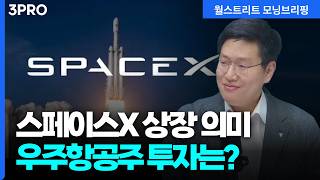
Prime Minister Kim Min-seok: 'Party leadership is a dream, but wanting it won't make it happen' | Prime Minister Kim Min-seok

김민석 총리 "당 대표 로망이지만" 욕심 내서 될 것 아니다 | 김민석 국무총리 [더 피플]
Watch on YouTube ↗  |  January 26, 2026 at 23:01  |  1:07:22  |  3PRO TV (삼프로TV)
Speakers
Kim Min-seok — former Prime Minister

Summary

Prime Minister Kim Min-seok discusses his recent US trip and Korea-US cooperation in nuclear power, shipbuilding, nuclear submarines, and semiconductors. He also addresses the Korean stock market's record-setting rally, government reform efforts, and the shift from real estate to capital markets. Other topics include housing policy challenges, regional administrative integration, domestic party politics, and the death of former Prime Minister Lee Hae-chan.

  • Kim Min-seok describes a US trip focused on relationship-building with Vice President Vance and follow-up on tariff and industrial cooperation.
  • He prioritizes nuclear power, nuclear submarines, and shipbuilding as areas where Korea can cooperate with the US.
  • He says Korean shipbuilding competitiveness comes from skilled workers and rapid cost/schedule estimates, and argues for stable worker visas.
  • He views the Korean stock market as structurally normalizing, citing governance reform, tax changes, transparency, and a shift from real estate to capital markets.
  • He notes KOSPI crossing 5,000 and KOSDAQ reaching record levels, while acknowledging technical fluctuations.
  • He says Seoul real estate remains difficult to control and argues for regional balance, supply measures, and tax policy.
  • He advocates agricultural investment immigration and buying cheap US farmland, especially in Georgia, for food security and long-term influence.
  • He also discusses regional administrative integration, party merger politics, and the death of former Prime Minister Lee Hae-chan.
Ideas
Kim Min-seok former Prime Minister 0:05
Korean shipbuilding benefits from US naval cooperation.
Kim Min-seok says Korea's top priorities in US economic talks are nuclear power, nuclear submarines, and shipbuilding, and he received a more active response than expected from Vice President Vance. He argues Korea's shipbuilding competitiveness comes from its skilled workforce's ability to produce rapid, accurate cost and schedule estimates, and that US law could allow Korean shipyards to build US Navy ships if the president declares an exception. He also notes that US-only hiring would struggle, so stable long-term visas for Korean skilled workers are needed, making Korean shipbuilding and naval/nuclear-submarine cooperation a policy-supported investment theme.
Kim Min-seok former Prime Minister 0:05
Nuclear power gains from US cooperation.
Kim Min-seok identifies nuclear power as one of Korea's main interests in US cooperation talks, saying Korea has capabilities the US urgently needs and can provide. He notes that Korea and the US are discussing legal exceptions for naval and nuclear submarine construction, and he wants milestones set to accelerate cooperation. This supports a positive view on the Korean nuclear power sector as a strategic beneficiary of Korea-US industrial cooperation.
Kim Min-seok former Prime Minister 18:55
US farmland is attractive long-term investment.
Kim Min-seok says he has advocated for agricultural investment immigration to the US for about ten years. He argues that good US farmland, such as in Georgia, can be bought for roughly one-hundredth of Korean land prices, and that Korea should buy land, build farms, send skilled workers, and let their children receive US public education and eventually settle. He sees this as a food-security and long-term influence strategy, making US farmland an attractive long-term asset.
Kim Min-seok former Prime Minister 19:52
Korean semiconductors are strategic US-supply opportunity.
Kim Min-seok says Korea's future lies in developing areas the US desperately needs and only Korea can supply, naming semiconductors and nuclear power as examples. He argues Korea should actively pioneer these fields and resolve visa issues to support cooperation. This is a positive strategic thesis for Korean semiconductors, supported by the improving semiconductor cycle that has also helped lift the Korean market.
Kim Min-seok former Prime Minister 25:46
Korean equities are in structural upward re-rating.
Kim Min-seok views the Korean stock market as undergoing a structural normalization rather than a temporary rally. He cites government efforts to improve corporate governance through commercial law amendments, tax reform, and market transparency, a shift of capital from real estate to capital markets, and the semiconductor upcycle. He acknowledges technical fluctuations but says the market is bottoming and trending upward, with KOSPI having crossed 5,000 and KOSDAQ reaching record levels.
Up Next

This 3PRO TV (삼프로TV) video, published January 26, 2026, features Kim Min-seok discussing Korean Shipbuilding, Korean nuclear power, U.S. farmland, Korean Semiconductors, EWY, KOSDAQ. 5 trade ideas extracted by AI with direction and confidence scoring.

Speakers: Kim Min-seok  · Tickers: Korean Shipbuilding, Korean nuclear power, U.S. farmland, Korean Semiconductors, EWY, KOSDAQ