BUZZBERGThe leaderboard is ranked by Alpha Score, which weighs a speaker's average return, their number of calls, and reputation — a credibility rating of the source that can only raise a score, never lower it.Read the FAQ
Sandisk's growth story remains intact with conservative guidance, massive free cash flow, and a $14 billion buyback authorization; the quarterly beat was far above consensus and the trends are extraordinarily positive despite a recent selloff.
"We still shake out at slightly higher estimates based on the strong iPhone 17 cycle... The higher price helps a lot." The market fears that a 15% price hike will kill demand. However, the analyst argues that the "replacement cliff" (users with 4-5 year old phones) is so steep that people must upgrade regardless of price. Furthermore, the math shows that a 15% price increase offsets the drop in unit volume, leading to net revenue growth. Long AAPL as it transitions from a hardware volume story to a pricing power/ASP story, supported by the AI software narrative. Consumer pushback is stronger than anticipated, causing unit volume to collapse rather than just flatten.
"We still shake out at slightly higher estimates based on the strong iPhone 17 cycle... The higher price helps a lot." The market fears that a 15% price hike will kill demand. However, the analyst argues that the "replacement cliff" (users with 4-5 year old phones) is so steep that people must upgrade regardless of price. Furthermore, the math shows that a 15% price increase offsets the drop in unit volume, leading to net revenue growth. Long AAPL as it transitions from a hardware volume story to a pricing power/ASP story, supported by the AI software narrative. Consumer pushback is stronger than anticipated, causing unit volume to collapse rather than just flatten.
"They have announced that partnership with Google. Google Gemini... I'm pretty optimistic that we're going to see something pretty interesting and meaningful step forward." Apple is notoriously insular. By explicitly relying on Google Gemini for the heavy lifting of "Siri 2.0," Apple validates Google's AI infrastructure as superior or necessary. This cements Google's position as the utility layer for consumer AI, even on iOS devices. Long GOOGL as the confirmed AI engine behind the iPhone's next supercycle. Apple eventually builds its own proprietary LLM to replace Gemini, cutting Google out of the ecosystem.
"They have announced that partnership with Google. Google Gemini... I'm pretty optimistic that we're going to see something pretty interesting and meaningful step forward." Apple is notoriously insular. By explicitly relying on Google Gemini for the heavy lifting of "Siri 2.0," Apple validates Google's AI infrastructure as superior or necessary. This cements Google's position as the utility layer for consumer AI, even on iOS devices. Long GOOGL as the confirmed AI engine behind the iPhone's next supercycle. Apple eventually builds its own proprietary LLM to replace Gemini, cutting Google out of the ecosystem.
"That's despite rising memory prices, which he says could drive iPhone prices up 15%... huge price increase from memory." This is a classic second-order trade. If Apple (the world's largest consumer electronics buyer) is being forced to raise retail prices by $150 specifically because memory components have become so expensive, it implies massive pricing power for the memory suppliers. Apple's cost headwind is Micron/Western Digital's margin expansion. Long the memory suppliers who are clearly dictating terms to OEMs. If Apple refuses to pay and cuts memory specs (lower GB per phone), demand for memory chips could soften.
"That's despite rising memory prices, which he says could drive iPhone prices up 15%... huge price increase from memory." This is a classic second-order trade. If Apple (the world's largest consumer electronics buyer) is being forced to raise retail prices by $150 specifically because memory components have become so expensive, it implies massive pricing power for the memory suppliers. Apple's cost headwind is Micron/Western Digital's margin expansion. Long the memory suppliers who are clearly dictating terms to OEMs. If Apple refuses to pay and cuts memory specs (lower GB per phone), demand for memory chips could soften.
"That's despite rising memory prices, which he says could drive iPhone prices up 15%... huge price increase from memory." This is a classic second-order trade. If Apple (the world's largest consumer electronics buyer) is being forced to raise retail prices by $150 specifically because memory components have become so expensive, it implies massive pricing power for the memory suppliers. Apple's cost headwind is Micron/Western Digital's margin expansion. Long the memory suppliers who are clearly dictating terms to OEMs. If Apple refuses to pay and cuts memory specs (lower GB per phone), demand for memory chips could soften.
"That's despite rising memory prices, which he says could drive iPhone prices up 15%... huge price increase from memory." This is a classic second-order trade. If Apple (the world's largest consumer electronics buyer) is being forced to raise retail prices by $150 specifically because memory components have become so expensive, it implies massive pricing power for the memory suppliers. Apple's cost headwind is Micron/Western Digital's margin expansion. Long the memory suppliers who are clearly dictating terms to OEMs. If Apple refuses to pay and cuts memory specs (lower GB per phone), demand for memory chips could soften.
"That's despite rising memory prices, which he says could drive iPhone prices up 15%... huge price increase from memory." This is a classic second-order trade. If Apple (the world's largest consumer electronics buyer) is being forced to raise retail prices by $150 specifically because memory components have become so expensive, it implies massive pricing power for the memory suppliers. Apple's cost headwind is Micron/Western Digital's margin expansion. Long the memory suppliers who are clearly dictating terms to OEMs. If Apple refuses to pay and cuts memory specs (lower GB per phone), demand for memory chips could soften.
"That's despite rising memory prices, which he says could drive iPhone prices up 15%... huge price increase from memory." This is a classic second-order trade. If Apple (the world's largest consumer electronics buyer) is being forced to raise retail prices by $150 specifically because memory components have become so expensive, it implies massive pricing power for the memory suppliers. Apple's cost headwind is Micron/Western Digital's margin expansion. Long the memory suppliers who are clearly dictating terms to OEMs. If Apple refuses to pay and cuts memory specs (lower GB per phone), demand for memory chips could soften.
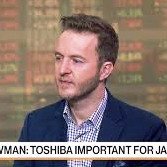
Mark Newman has 6 trade ideas tracked on Buzzberg across 6 tickers since February 2026. Ranked #57 on the Buzzberg Alpha leaderboard. Most covered: AAPL, GOOGL, MU.