Mexico’s Unconventional Solution to Shipping Chokepoints
Спикеры
Alejandra Velásquez
— Head of Investment and Commercial Development, CIIT
Brandon Daniels
— CEO, Exiger
Jean-Paul Rodrigue
— Professor, Texas A&M University Department of Maritime Business Administration
Simon Hampton
— Bloomberg Reporter
Bloomberg examines Mexico's Interoceanic Corridor of the Isthmus of Tehuantepec, a land-based rail, road, and port route between the Pacific and the Gulf of Mexico designed as an alternative when global shipping chokepoints are disrupted. Officials and experts discuss rising supply-chain risks from the Strait of Hormuz, the Red Sea, the Strait of Malacca, the Taiwan Strait, and the Panama Canal. The piece also highlights overland and Arctic alternatives and Exiger's view that disruptions are creating a premium on supply-chain resilience and reshoring.
- CIIT connects the Pacific Ocean to the Gulf of Mexico through rail, road, and ports in southern Mexico.
- Officials describe CIIT as an alternative to the Panama Canal rather than a direct competitor.
- Global chokepoints including Hormuz, the Red Sea, Malacca, the Taiwan Strait, and Panama create recurring supply-chain risk.
- Shipping companies and Middle Eastern countries are pursuing overland pipelines, rail, and Arctic alternatives.
- CIIT aims to expand from oil and derivatives cargo to broader container traffic and industrial parks.
- Exiger sees rising demand for real-time supply-chain risk tools and a coming premium on reshoring.
Идеи
Mexico's CIIT corridor becomes competitive alternative
Mexico's Interoceanic Corridor of the Isthmus of Tehuantepec is expanding from oil and derivatives into broader container and industrial cargo, with four southern ports, rail growth, and planned specialized terminals. Supply-chain chokepoint disruptions are making it a competitive alternative and a long-term industrial development driver for southern Mexico.
Supply chain reshoring gains premium
Rising supply-chain disruptions, rerouting needs, and enforced tariff regimes will create a period where there is a premium on resilience, restructuring, and reshoring; companies that help navigate and reconfigure supply chains are positioned to benefit.
Далее

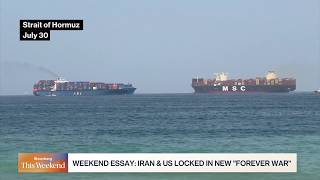



This Bloomberg Markets video, published August 15, 2026, features Alejandra Velásquez, Brandon Daniels discussing EWW, Reshoring and supply chain resilience. 2 trade ideas extracted by AI with direction and confidence scoring.
Speakers: Alejandra Velásquez, Brandon Daniels · Tickers: EWW, Reshoring and supply chain resilience