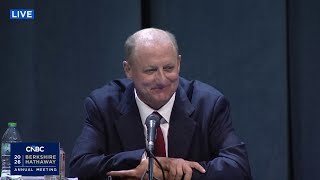
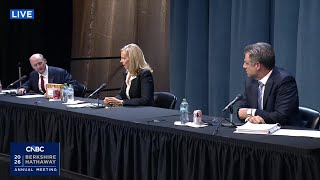
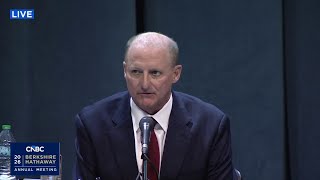
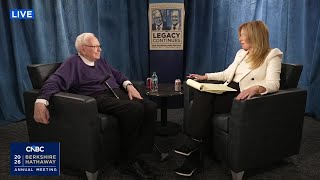
Greg Abel on potential for divesting businesses: 'It has to be a relationship that works'
Speakers
Greg Abel
— CEO, Berkshire Hathaway
Summary
Greg Abel, CEO of Berkshire Hathaway, explains the conditions under which Berkshire would divest a business, including labor issues, reputational risk, unsustainable cash flows, and broken regulatory relationships. He cites the sale of a portion of Pacific Corp in Washington state as an example of a divestiture driven by incompatible state policies and a failed multi-state compact.
- Abel outlines Berkshire's criteria for divesting businesses: labor issues, reputational risk, unsustainable cash flows, and broken regulatory relationships.
- He emphasizes that Berkshire buys businesses with the intention of forever ownership, but will exit if the relationship no longer works.
- The sale of a portion of Pacific Corp (Washington utility) is given as a concrete example of a divestiture.
- The divestiture was driven by Washington state's specific policies imposing costs on other states in the multi-state compact.
- Berkshire found a purchaser aligned with Washington's policy, believing it a better outcome for the state and customers.
- No explicit investment recommendation or trading idea is made in the segment.
- Abel underscores that capital deployment decisions are taken seriously and that the regulatory compact must provide a fair return.
- The discussion focuses on corporate strategy rather than actionable market views.